Spring
Tulips, narcissi, peonies
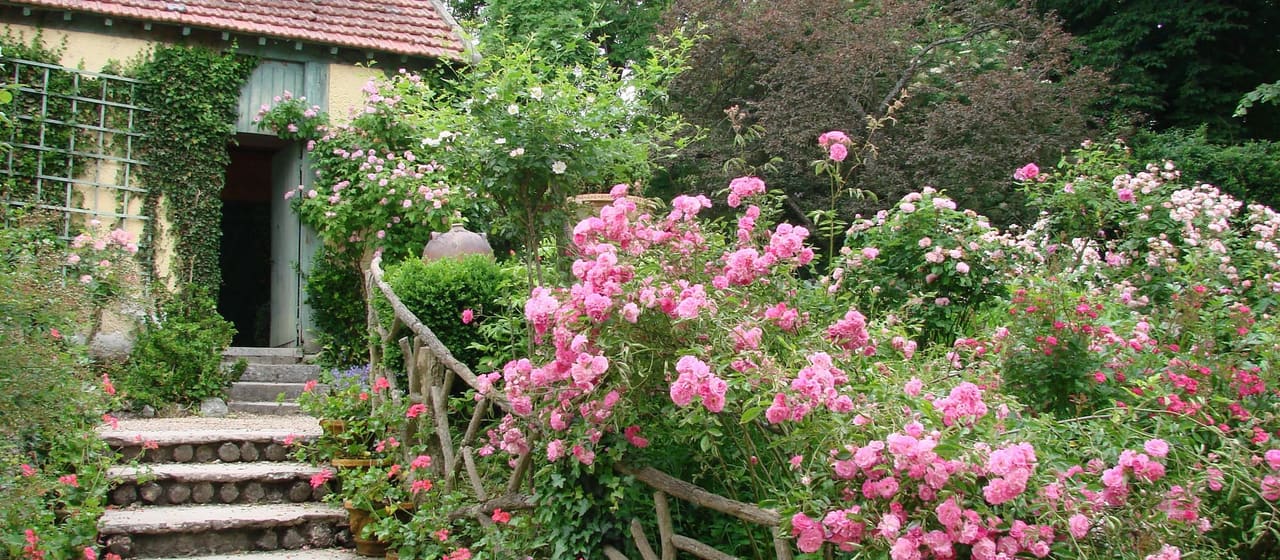
The garden
A hectare of hillside, and the project of turning it into an open-air book.
The project
« Where flowers become memory. »
The garden of the former Hôtel Baudy is the subject of a project led by the association Les Jardins Baudy des Peintres Américains: to turn the grounds into a memory walk devoted to the Giverny artists’ colony.
The principle is simple. No long straight avenues, but a winding path from which the whole garden is never visible at once. At each turn, a station: an artist, a plant associated with them, a plain plaque bearing their name, their dates and the reason they are honoured. Nothing more. A discreet reproduction of one of their works, set on a sloping table as in a museum. A bench, placed where a painter might have set up an easel.
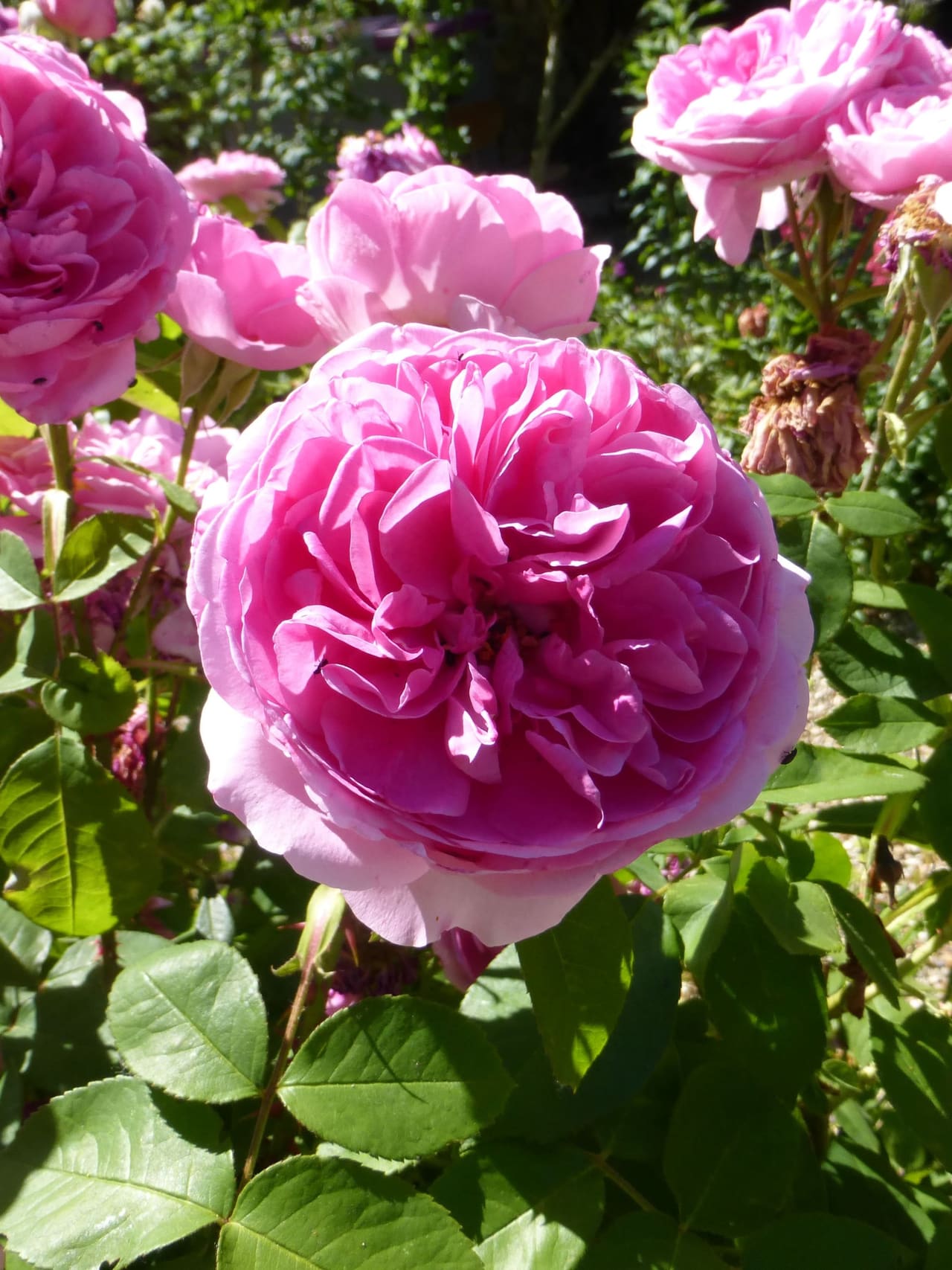
At the centre, a pergola covered with old roses; around it, the American painters. A small lily pool, a nod to Monet, without attempting to reproduce his garden. And an easel left empty, where anyone may come and paint.
The Memory Garden is not designed to be finished. Each year should add a figure, a planting, a ceremony. In fifty years it might hold a hundred roses, each telling a part of Giverny’s story.
Already there
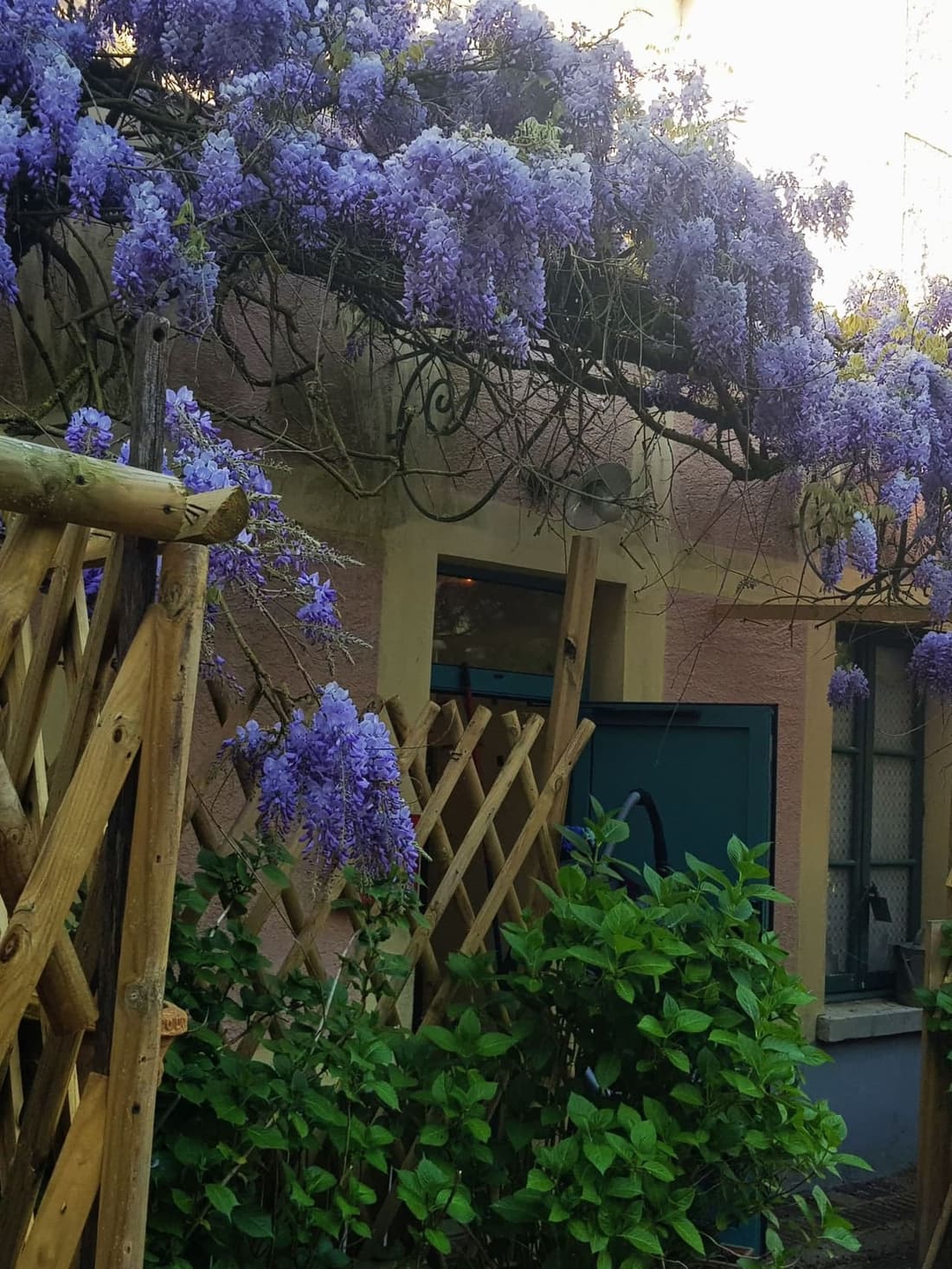
Before any project, the ground already held its own witnesses. On the rear façade, an enormous wisteria, so wide that no single photograph contains it: its knotted arms run above the kitchen door, and it flowers every spring, a little later than the rest, though it is planted on the north side and almost never sees the sun. Giverny News says Angélina Baudy planted it — it would be the oldest living thing in the house.
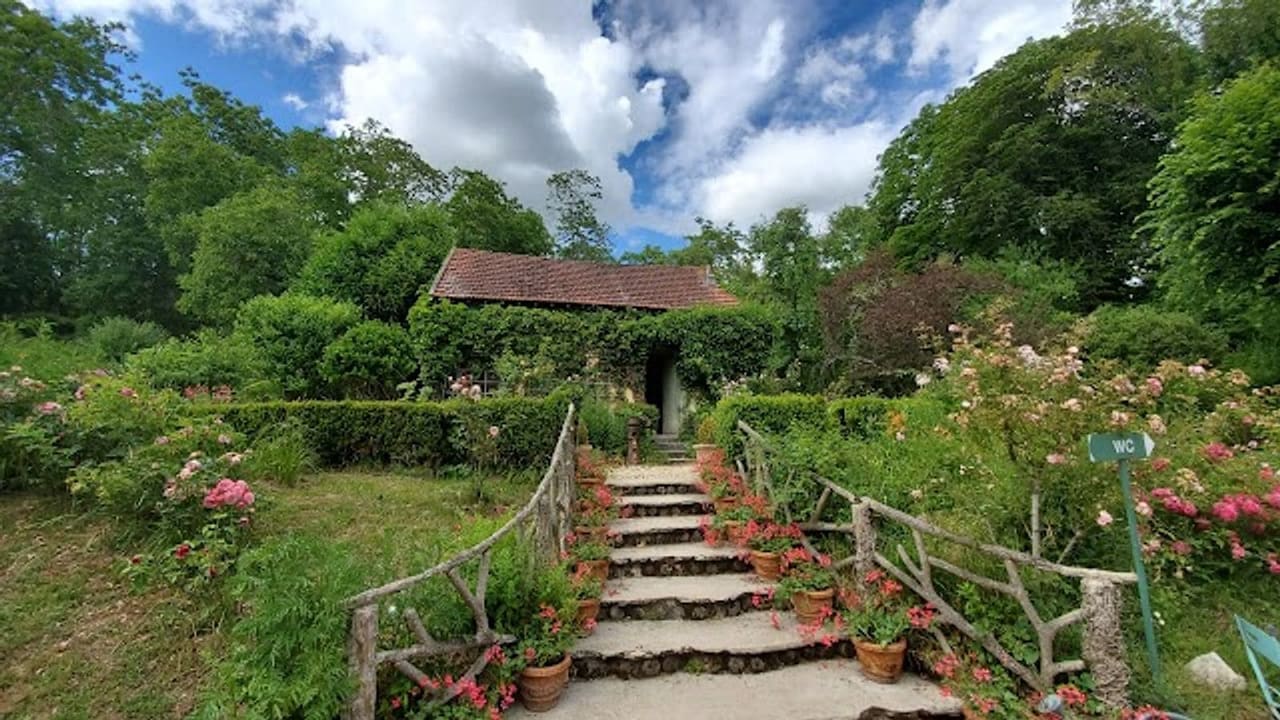
Higher up, the staircase climbing towards the studio has railings of faux bois: cement moulded into logs, with knots, bark and sawn ends, a gardener’s craft practised from the Second Empire to the Belle Époque. The risers are of the same stuff, laid like cordwood. A piece of period décor, still in place.
The stations
Each artist honoured is associated with a plant. The garden thus becomes a botanical collection as much as a historical walk. This table is the project’s; it will be completed as planting proceeds.
Through the year
Tulips, narcissi, peonies
Roses, irises, delphiniums, lavender
Asters, dahlias, grasses
Holly, bark, tree silhouettes, old roses
Before the roses
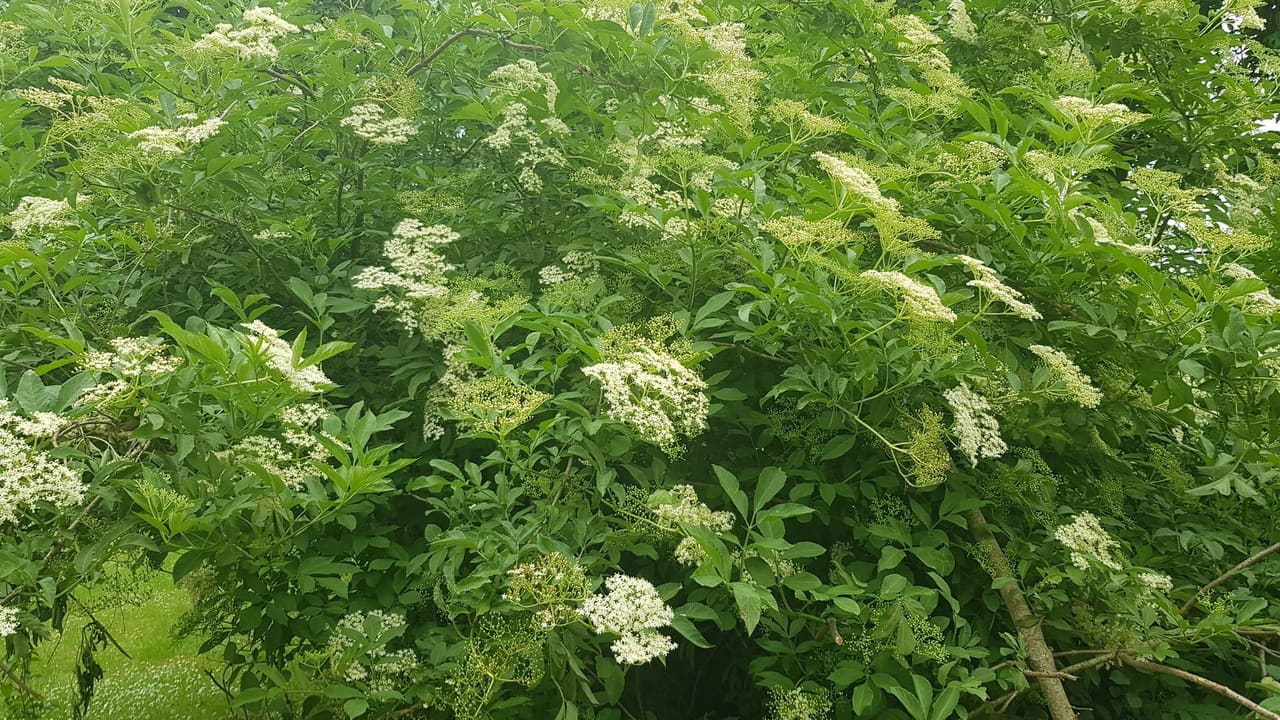
In the 19th century vines grew well north of the Loire — even on the hill of Montmartre. At Giverny it was the hillside that carried them, held up by low terrace walls; they gave a light wine, closer to plonk than to a grand cru. Phylloxera, at the end of the century, put an end to these vineyards, and the terraces went back to scrub.
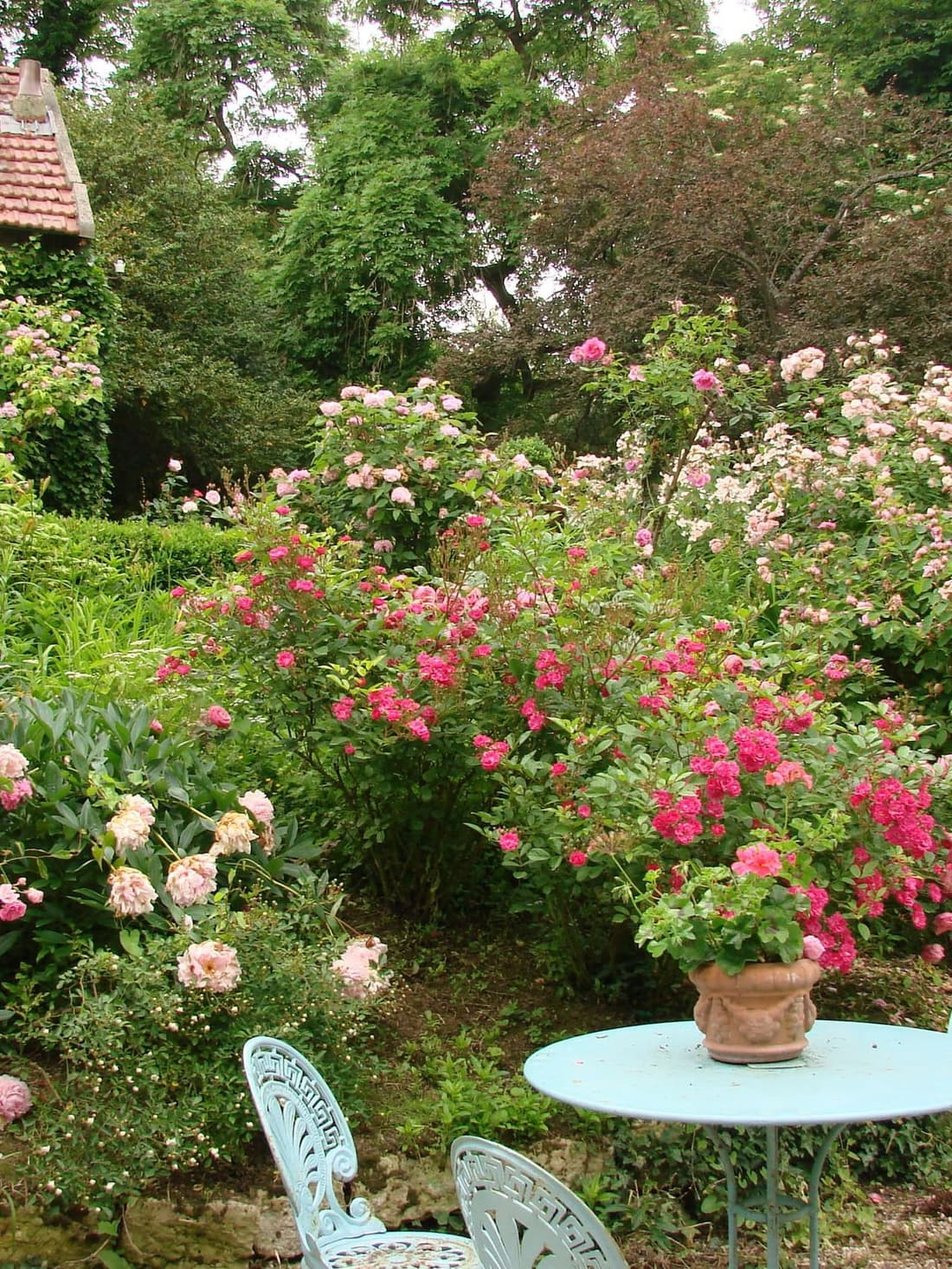
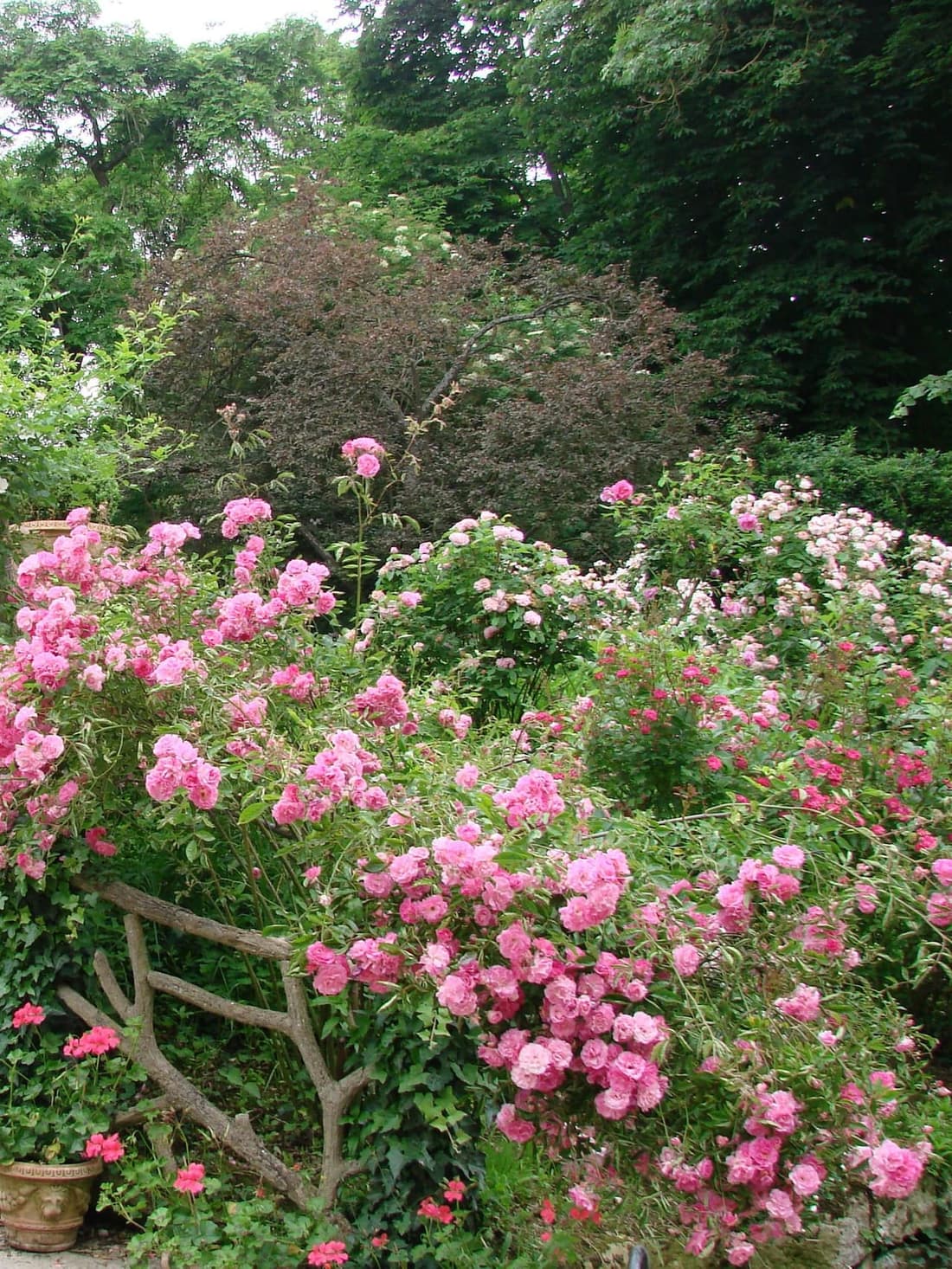
The pleasure garden took them over. With the first plant catalogues and the great glasshouses of the World’s Fairs, a fashion once reserved for the elite spread to everyone, and the rose became its queen. The house’s booklet credits the birth of the Baudy garden to the nearness of Monet’s and to a nurseryman down on the plain: a garden made for pleasure rather than to a plan, with resting places on each level to settle down palette in hand, and an “ocean of roses” that, from May to June, spilled down to the street.
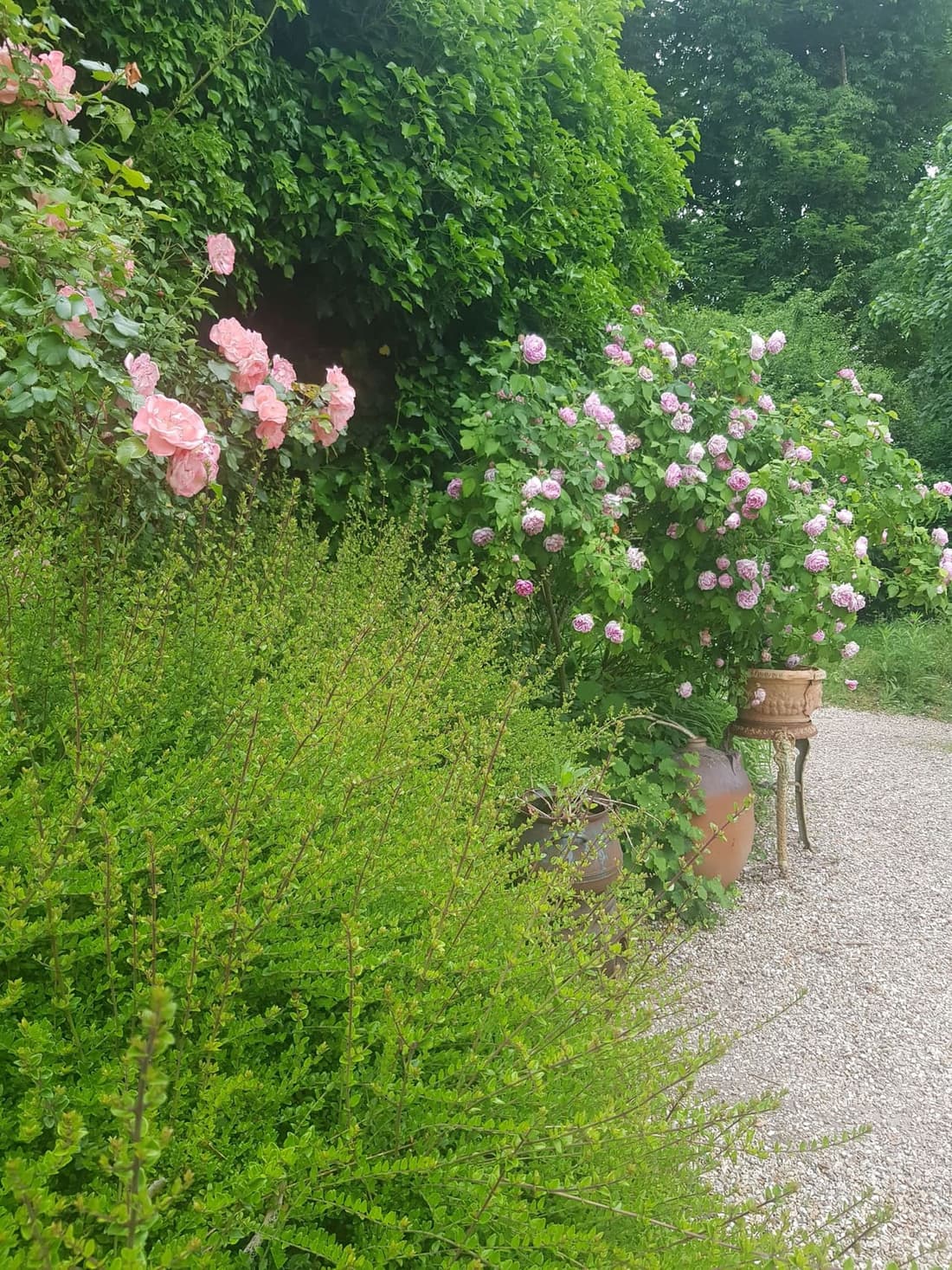
The terraced rose garden visitors walk today was recreated between 1989 and 1991 by Christian Jeanney. It keeps that spirit: winding paths overrun by daisies, valerian and St John’s wort, stone steps losing themselves up the hillside, climbing roses scaling the trees.
Rose garden
The rose garden is the central motif. The varieties below appear on the house’s order lists.