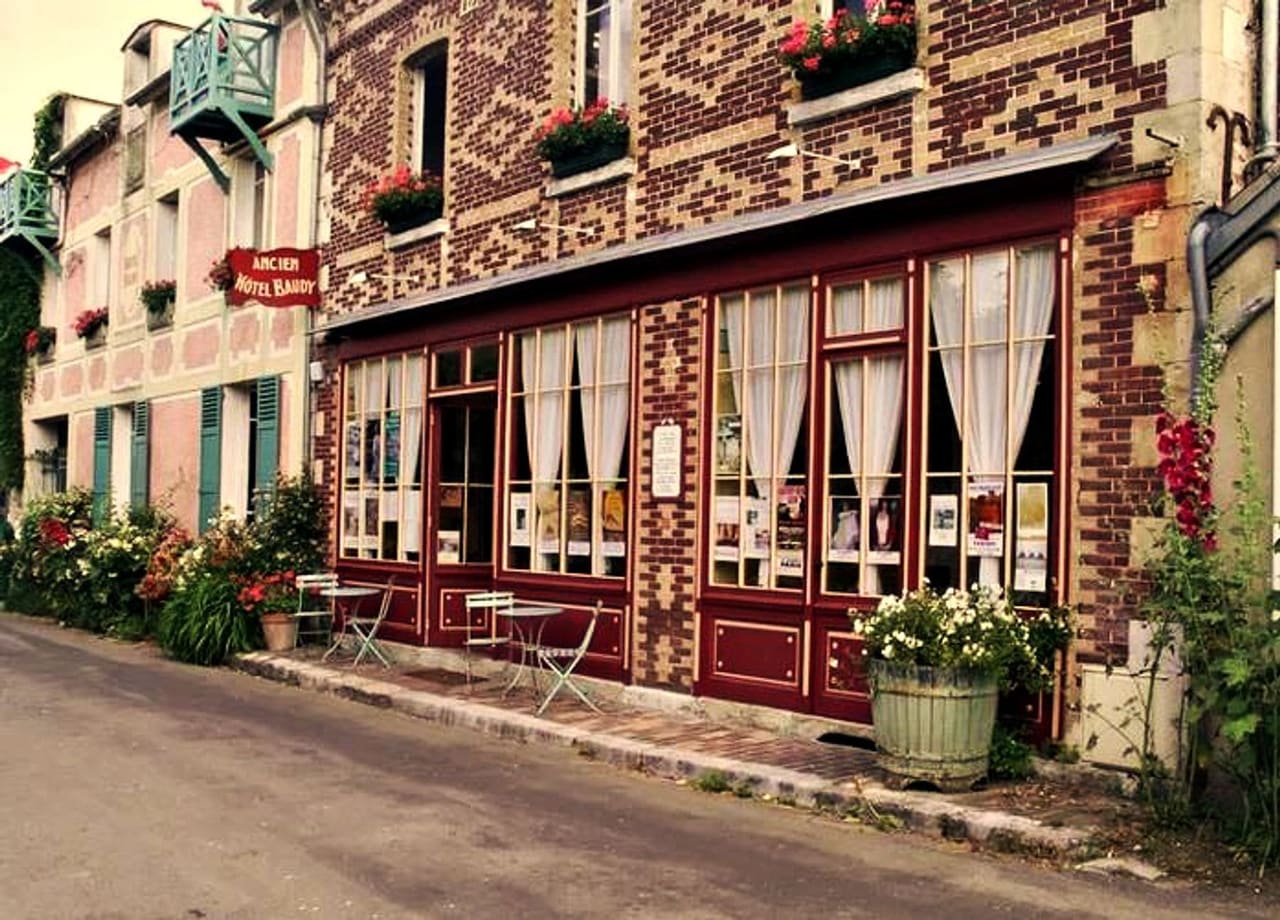
From the opening of the Baudys’ grocery and refreshment room to the last alterations of the house: the milestones of a century of Giverny life.
Scroll horizontally to browse the timeline
1869
Baudy fils, sewing machines
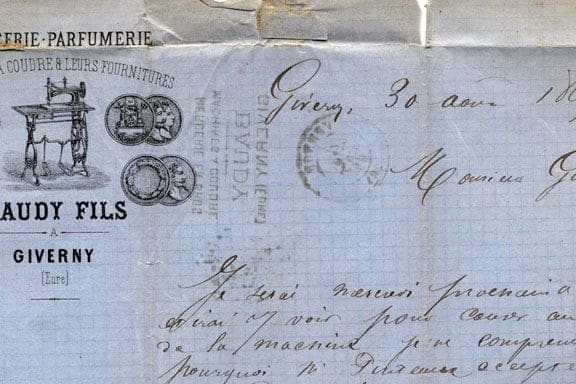
Before the hotel, and before even the grocery as it is usually imagined, the house was a haberdashery and sewing-machine business. A letter on engraved paper dated 30 April 1869, and an envelope cancelled at Vernon the same year, carry its trading name: “BAUDY FILS à Giverny”.
1883
Claude Monet settles in Giverny
The painter’s arrival in the village shortly precedes that of the foreign artists. Monet never lodged with the Baudys, and nothing attests that he himself sent visitors there: it was his presence alone in the village that drew the painters.
1886
Willard Metcalf pushes open the door
The house was then a village shop: grocery, haberdashery, bar. Willard Metcalf, an American painter from Massachusetts, arrived that year aged twenty-six — the Peers de Nieuwburgh collection gives him as the first of the Americans, and relates that Angélina Baudy nearly turned him away before she saw his painting kit. The guest register, which begins only in 1887, cannot confirm the date.
June 1887
The hotel opens
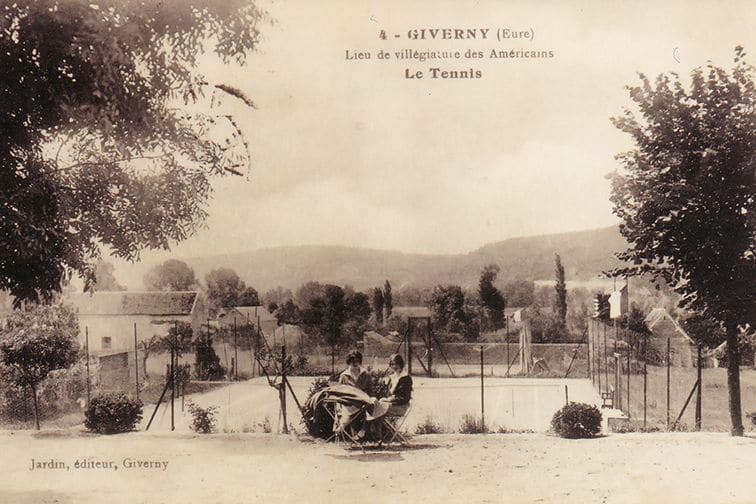
Angélina and Lucien Baudy opened the hotel in June 1887: cheap rooms, a studio in the garden, a tennis court. The guest register was started the same year — it would run until 1899 and hold some seven hundred entries. Back at the Académie Julian, Metcalf had spread word of the village; John Leslie Breck arrived with a small group of expatriates. The American colony was born.
1887 — 1891
The first hotel in France fitted out for painters
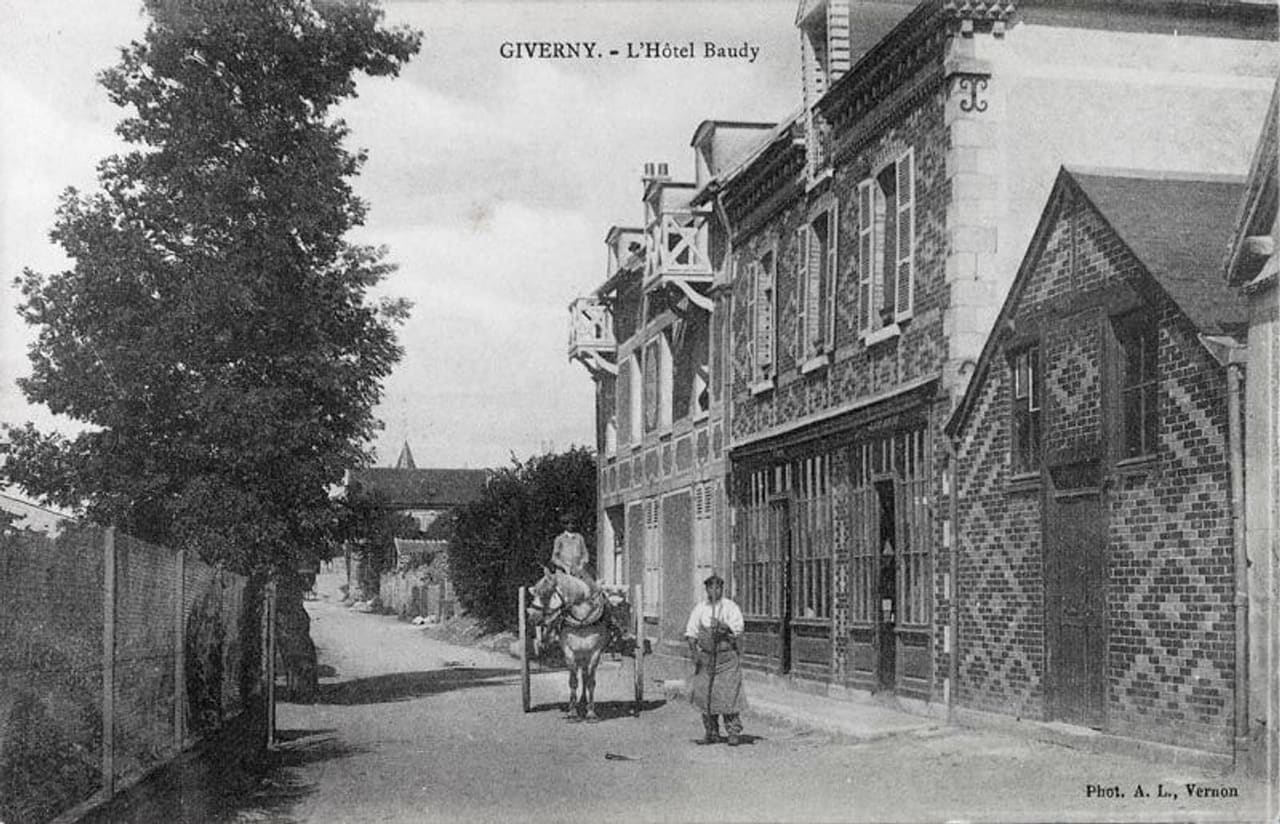
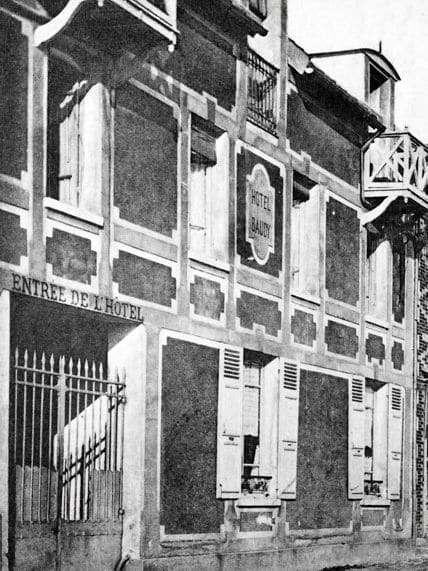
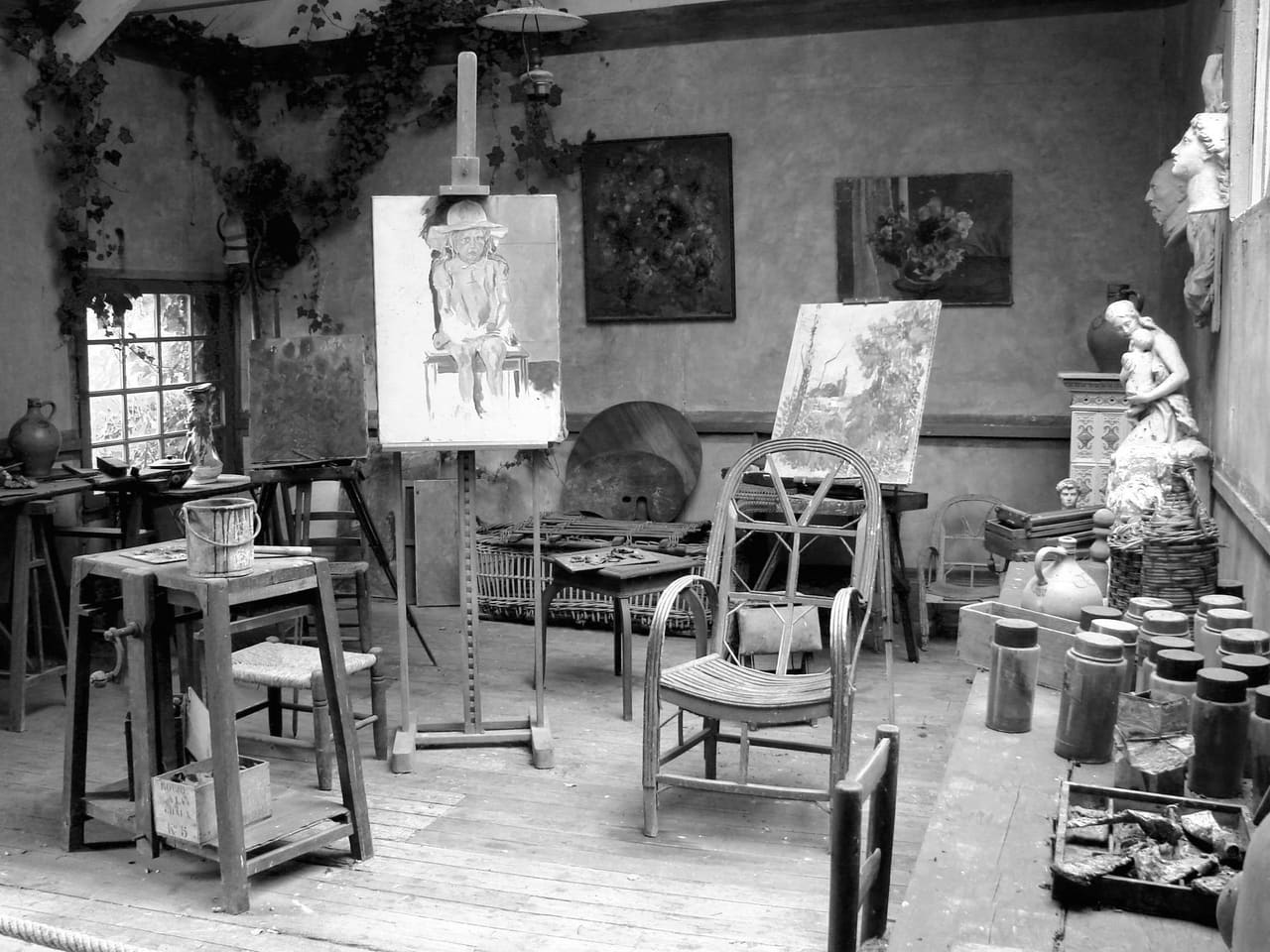
Angélina Baudy transformed the business. The studio was built in the garden in 1887 — a free-standing pavilion with a north-facing skylight; the Peers de Nieuwburgh collection credits the initiative to Theodore Robinson. Two more studios were fitted under the roof in 1890. Then came some twenty bedrooms and a large corner terrace. Lucien’s sewing-machine workshop became the ballroom. According to that same source the house was then the first establishment in France fitted out specially for painters. Of the three studios, only the garden one survives.
1893
The house supplies the commune
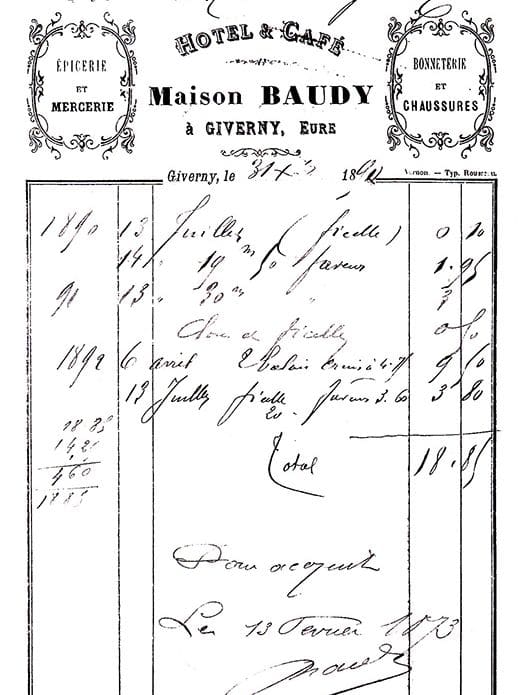
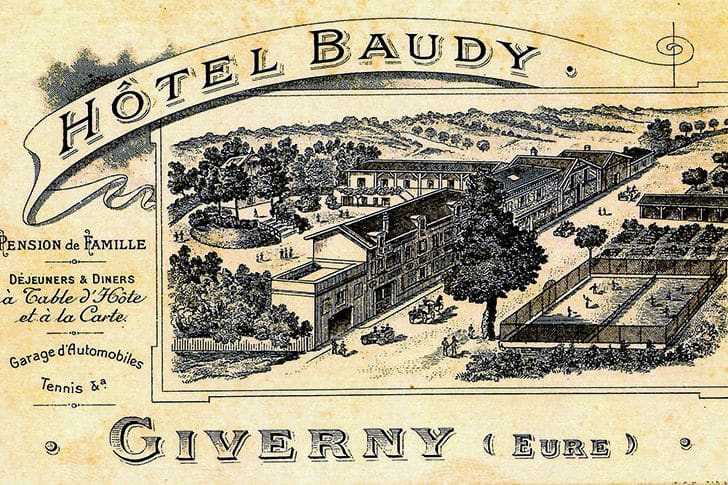
An invoice receipted on 15 February 1893 itemises supplies delivered to the Giverny town hall between 1890 and 1892, for eighteen francs fifteen. The letterhead says what the house then was: “Hôtel & Café — Maison Baudy”, grocery and haberdashery, hosiery and footwear. The hotel had not replaced the shop: it had been added to it.
Autumn 1894
Paul Cézanne’s stay
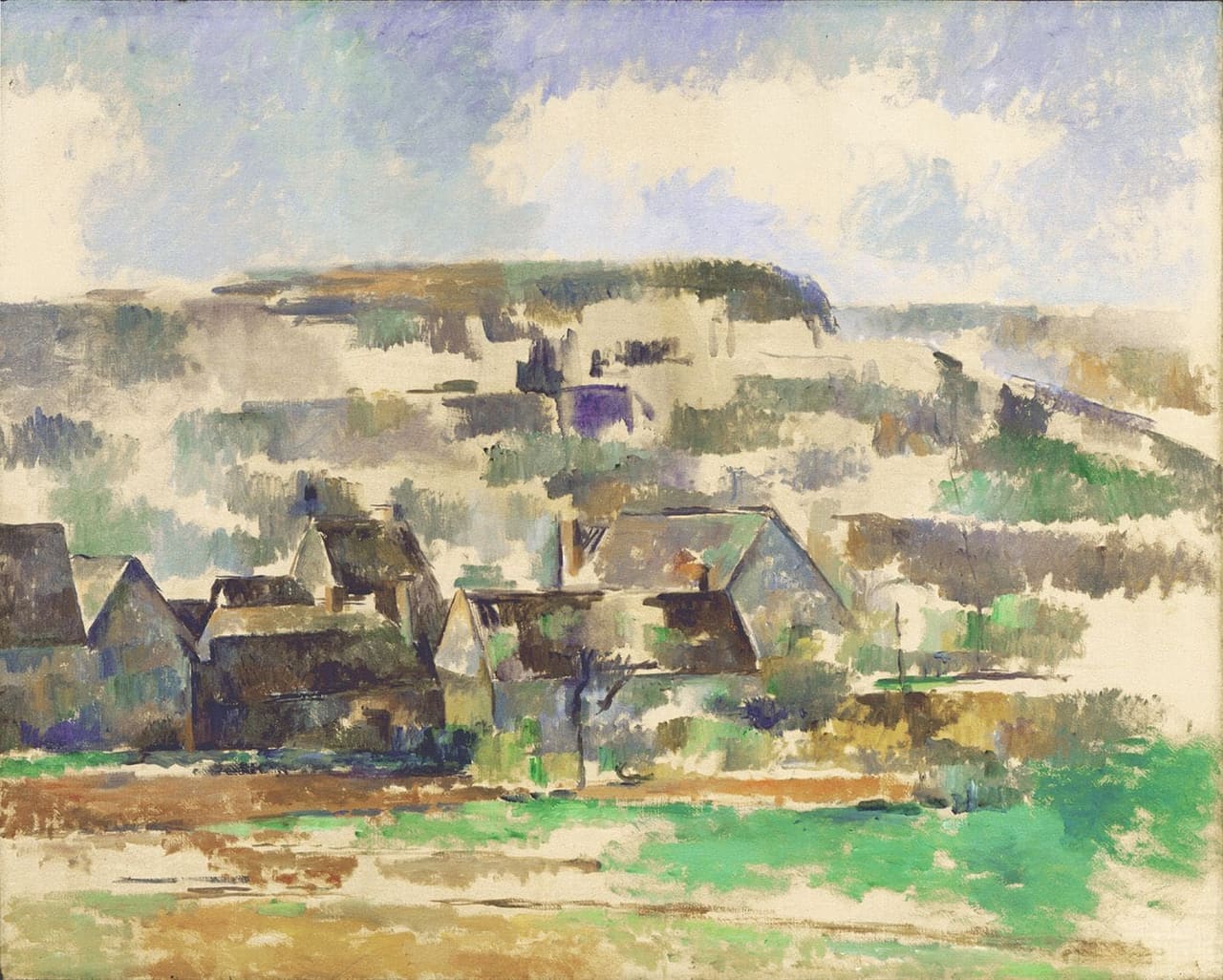
Invited by Monet, Cézanne lodged at the Hôtel Baudy from 30 September to 28 November. Mary Cassatt was staying at the same time; the American painter Matilda Lewis sketched his portrait there. Two known canvases came of it: “Paysage d’hiver (Giverny)”, 65 × 55 cm, now at the Philadelphia Museum of Art, and “Giverny (hôtel Baudy)”, 65 × 81 cm, in a private collection — the latter painted from the corner terrace of the house. The Société Cezanne relates that he left Giverny abruptly, convinced he was being mocked by the friends Monet had gathered to support him, abandoning several canvases at the inn.
1887 — 1920
An international artistic crossroads
For more than thirty years the house brought together painters, sculptors, engravers and writers from the United States, Canada, Britain, Australia and Europe. Masquerade balls, games of billiards, exhibitions hung in the dining room: the Smithsonian Institution gives 1887-1920 as the period of family management. The end of it is less clear-cut than it looks, however — the Giverny sources still show Angélina serving in the house, with her daughter-in-law Clarisse, in the 1930s, by which time the sign already bore the Evans name.
1898 — 1911
The musical and theatrical evenings
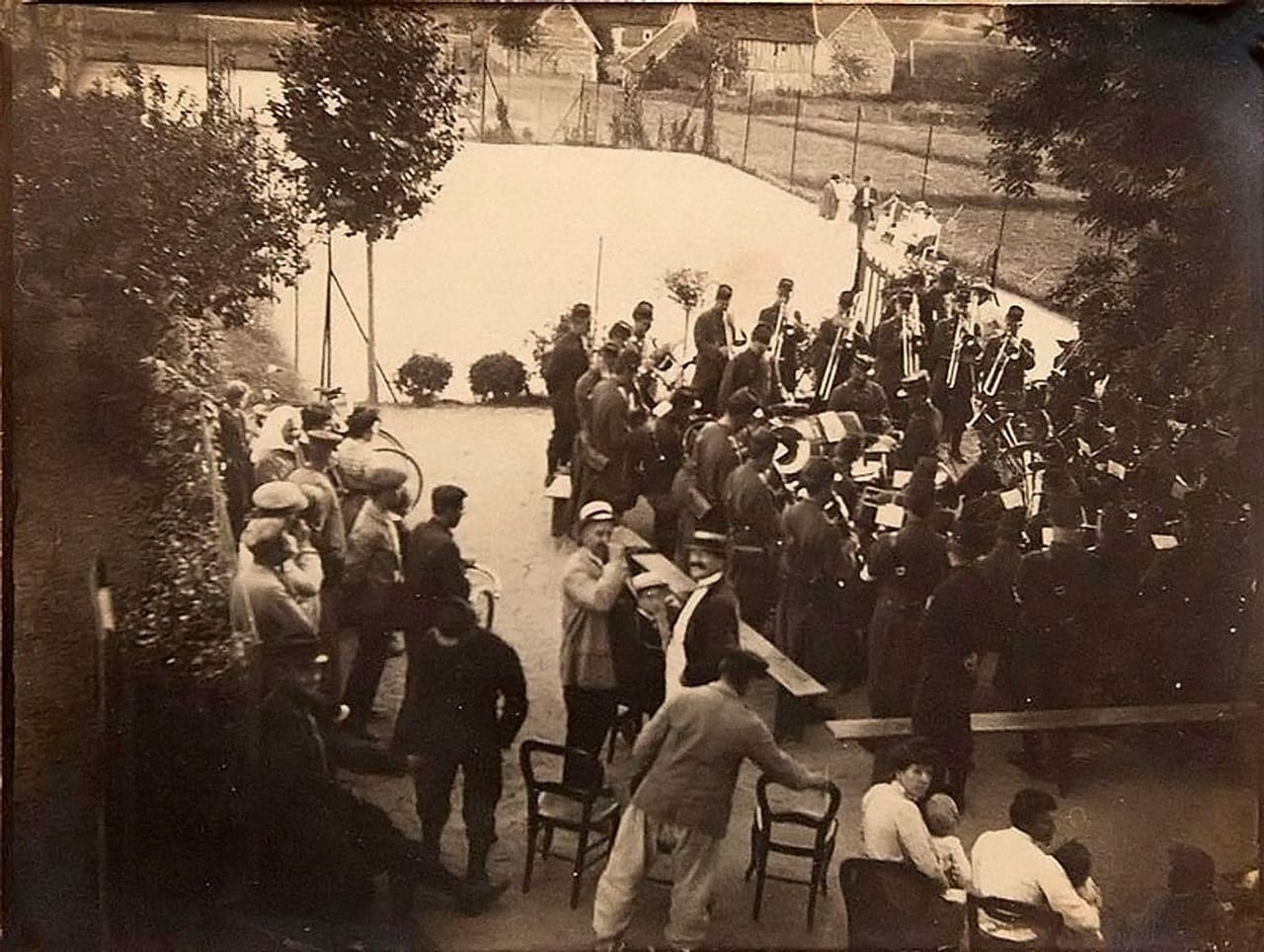
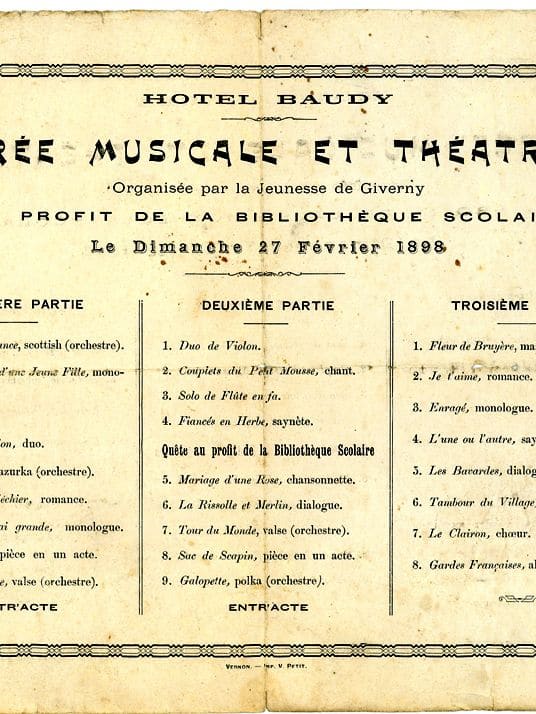
Four printed programmes survive. The young people of Giverny gave their evenings at the Hôtel Baudy on 27 February 1898 and 4 February 1900 in aid of the school library, then on 27 February 1910 and 30 April 1911 in aid of the Société de Tir. Orchestra, monologues, songs, one-act comedies: the house was also the village hall.
August 1908
A photograph bearing its own date
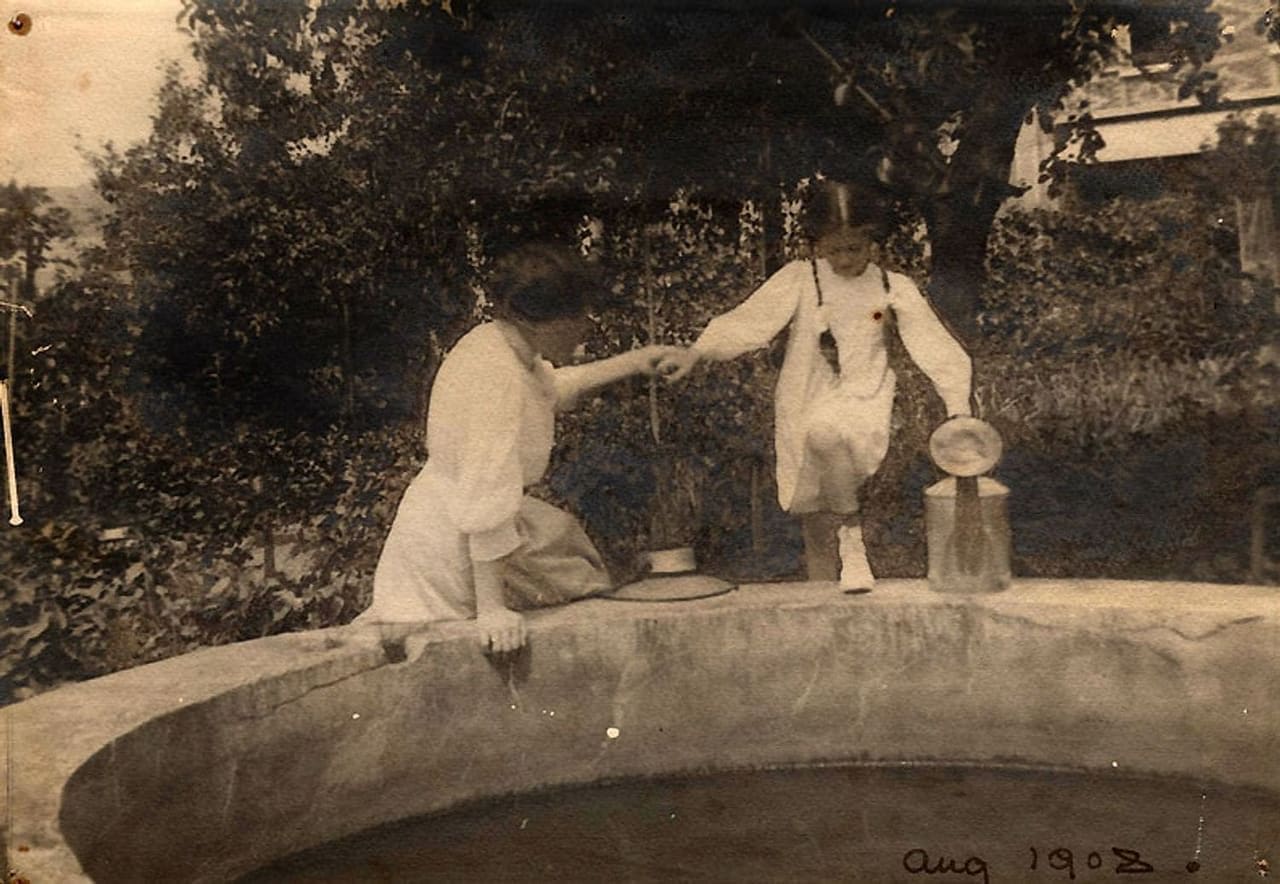
Two people pose on either side of the circular pool in a wood. A handwritten note can be read at the foot of the print: “Aug 1908”. It is the only item in the collection bearing its own date.
1914 — 1918
The First World War
The war dispersed the American colony at Giverny and largely brought the period to an end.
1930
Christmas Eve
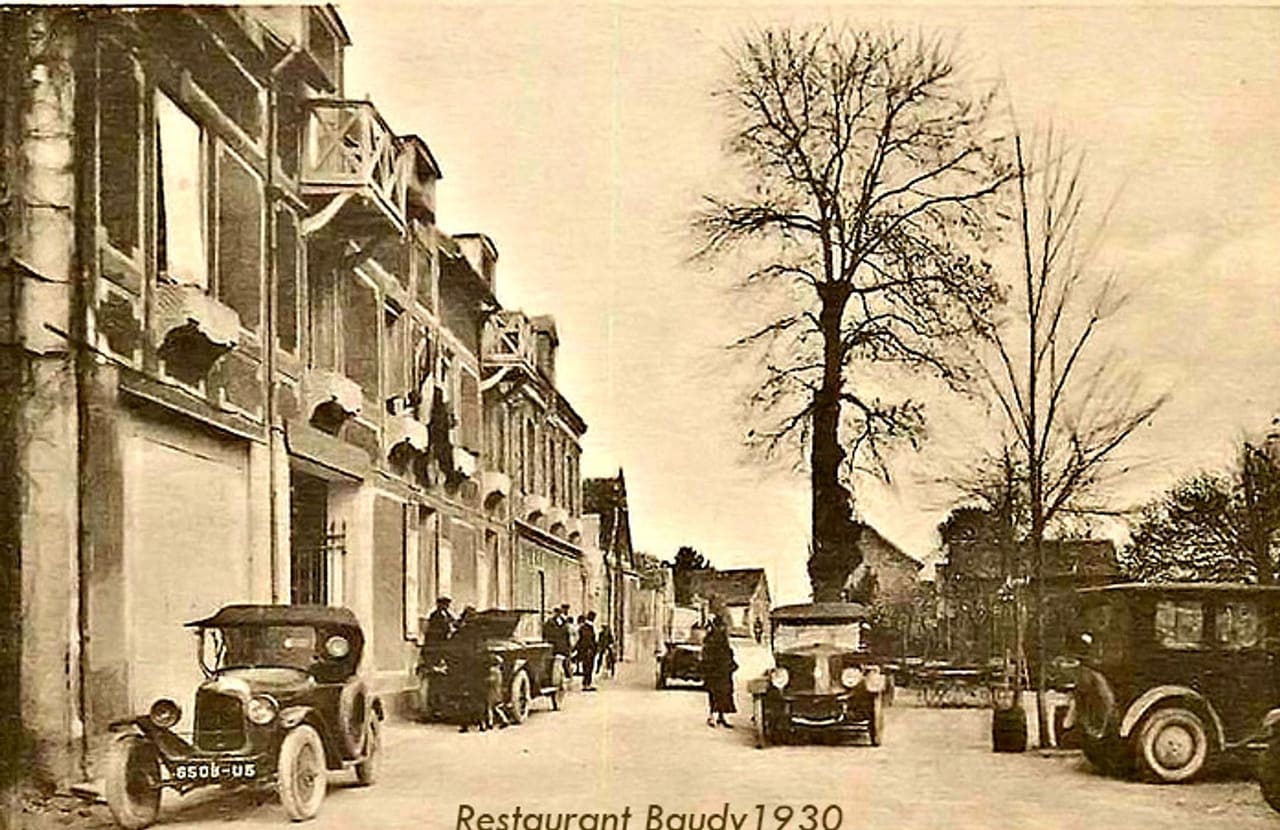
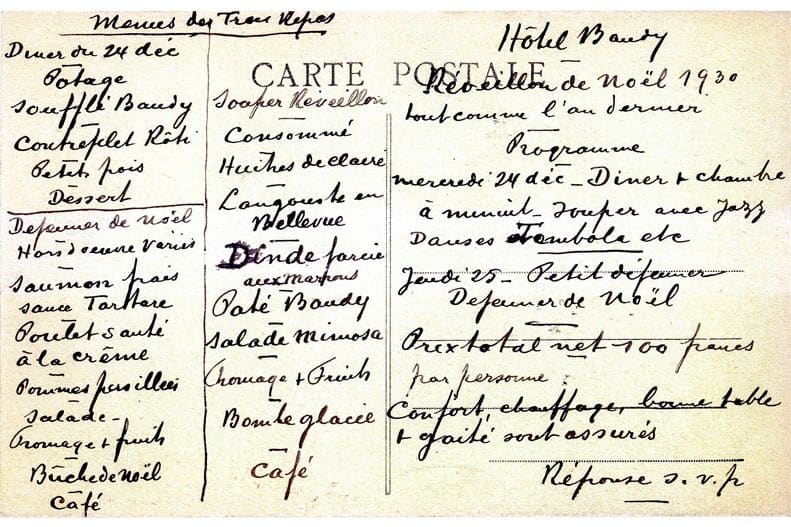
A handwritten card announces the réveillon of 24 December 1930: dinner and room, supper at midnight with jazz, dancing and a tombola, then Christmas lunch the next day. One hundred francs net a head — “comfort, heating, good food and good cheer assured”. The painters’ hotel had become a holiday house.
20th century
A house through the century
Changes of ownership, damage, alterations: this period is less documented than the golden age.
1941 — 1942
The end of an era
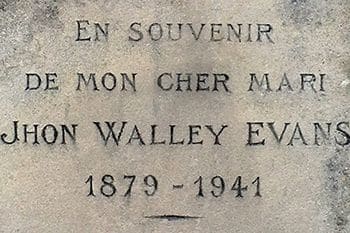
John Walley Evans, known as Billy, the last hotelier of the house, died in 1941 at sixty-two of the effects of torture at the Kommandantur; his headstone in the Giverny cemetery bears the dates 1879-1941. The following winter his wife lent the former studios for the village catechism. Angélina Baudy died in October 1942, aged eighty-nine.
After 1945
Restaurant and tea room
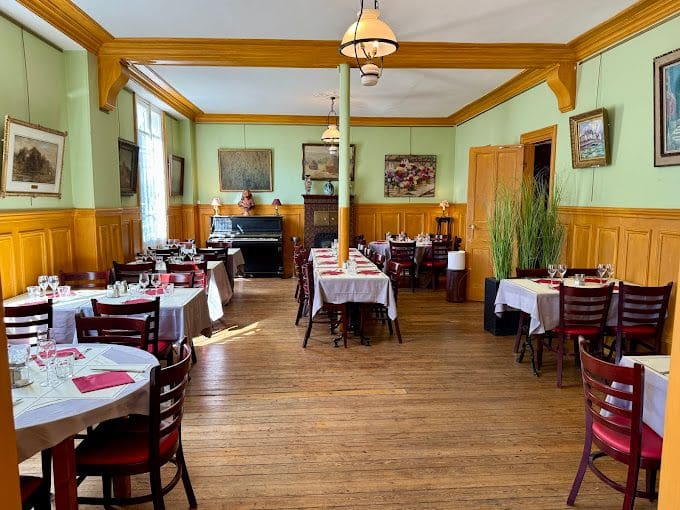
The hotel business gave way to a restaurant. The house kept its studio, its garden and its terrace.
Today
Restaurant Baudy and the gardens
The house still welcomes visitors to Giverny: the restaurant, the freely accessible studio and a park of one hectare.