Hôtel Baudy Giverny
FR EN
Restaurant
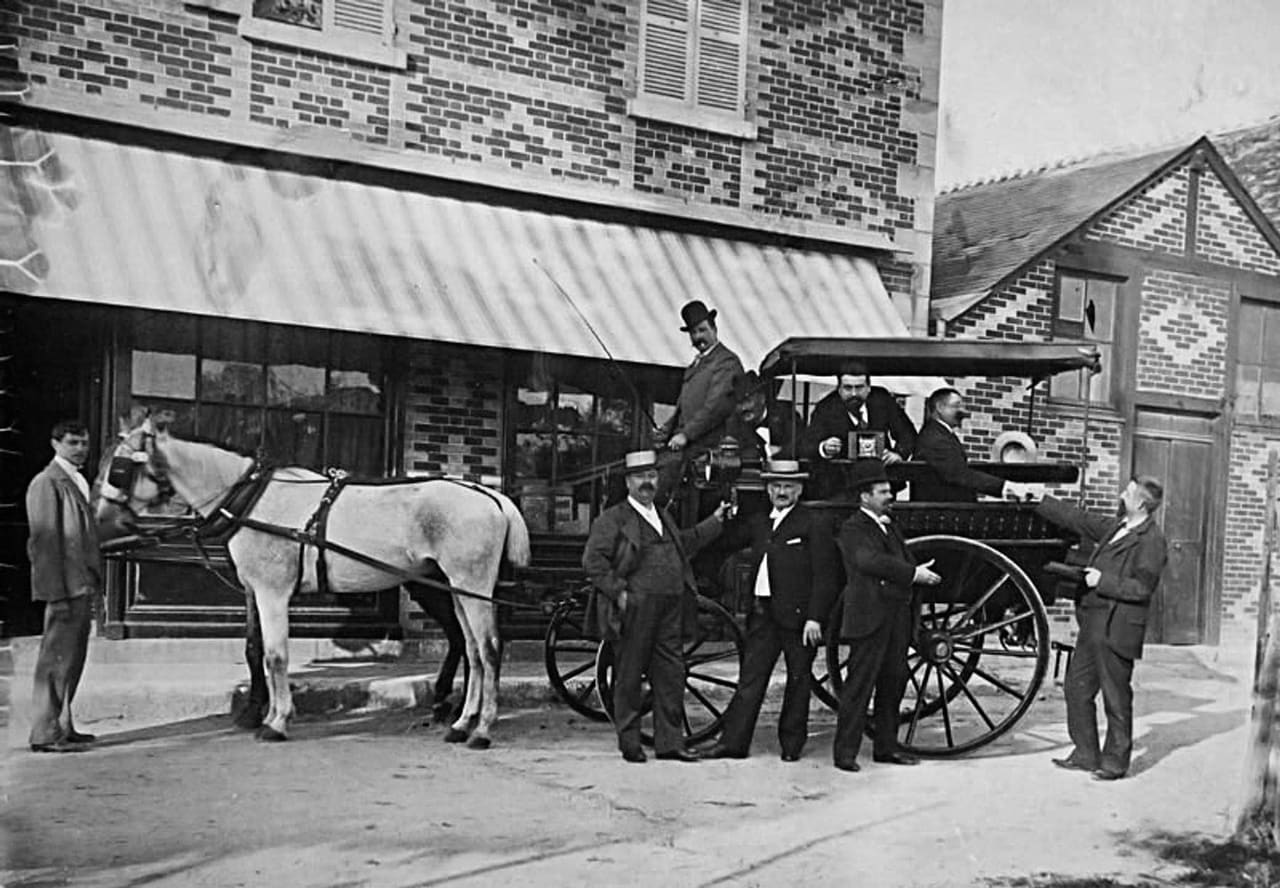
Period photograph: a horse-drawn carriage and a group of men in front of the striped awning of the Hôtel Baudy in Giverny

Hôtel BaudyGiverny

At the heart of the American painters’ colony

A story of artists, gardens and encounters in Giverny.

Scroll
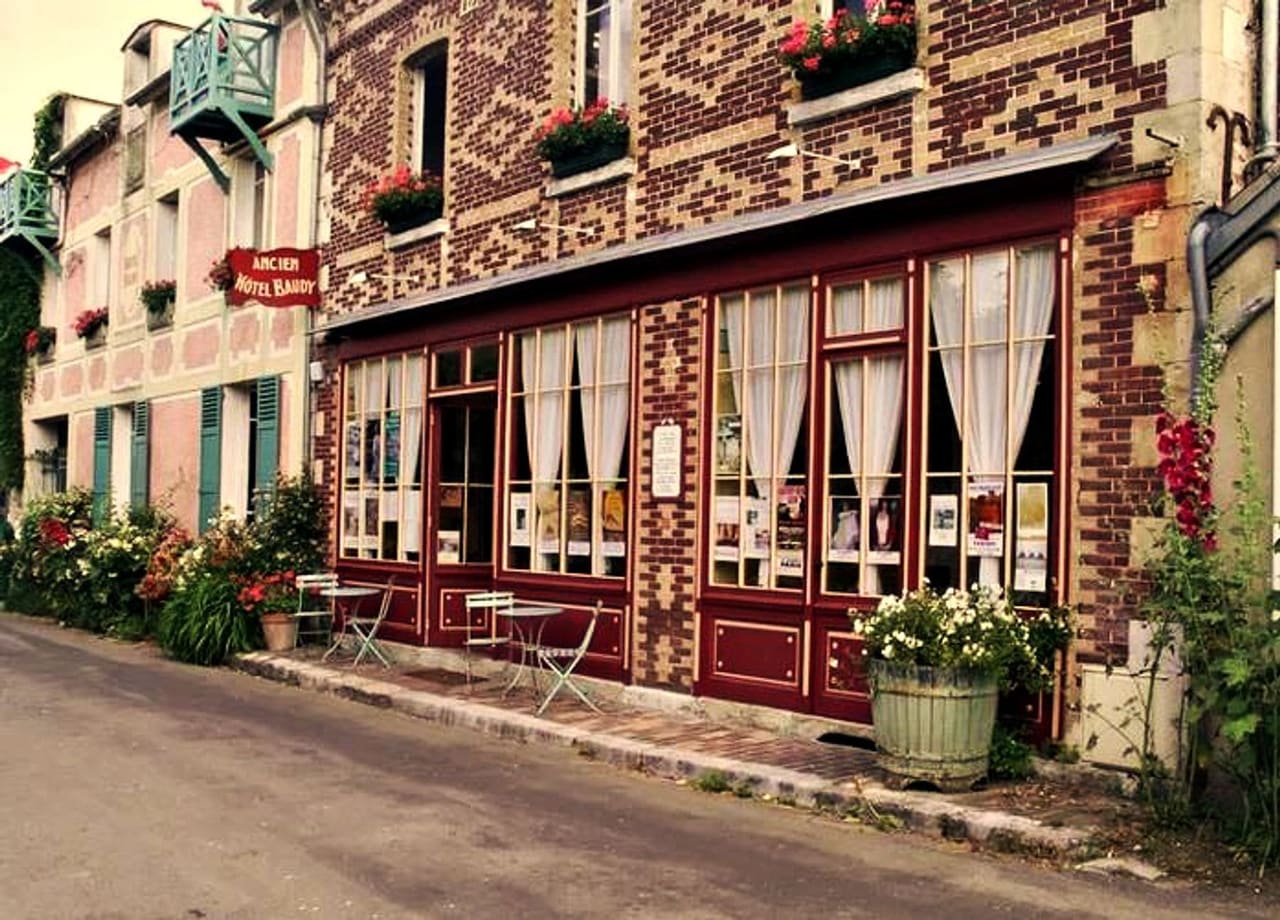
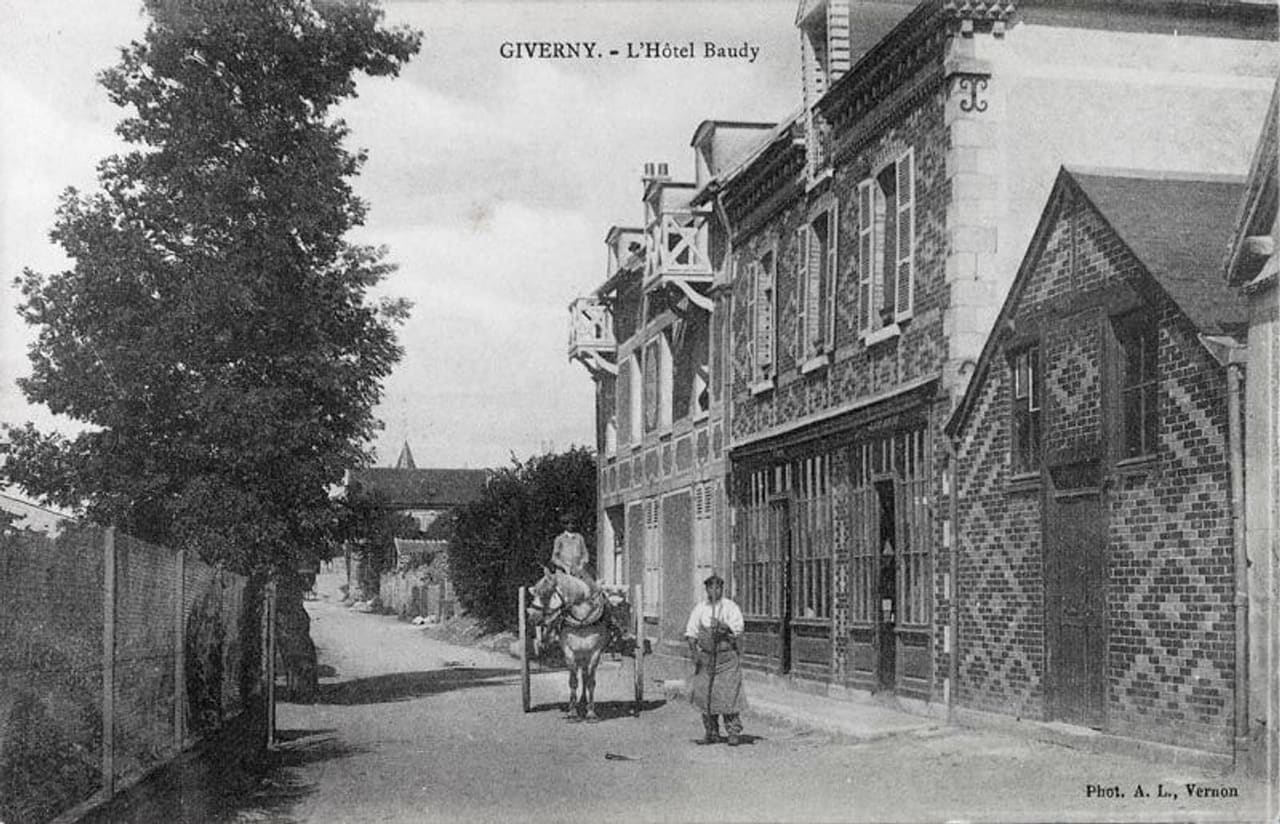
Period postcard: the brick façade of the Hôtel Baudy seen from the street, with a donkey cart
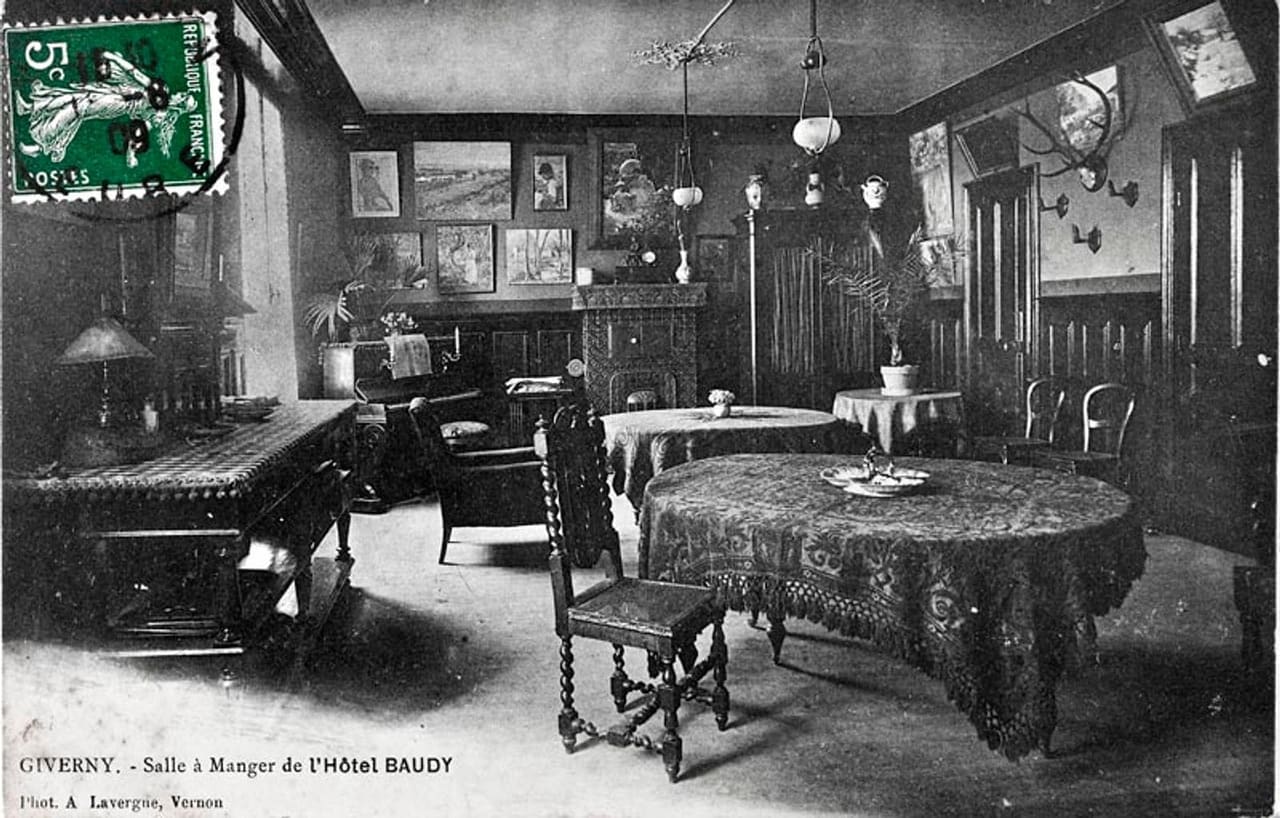
Stamped postcard showing the dining room of the Hôtel Baudy, its clothed tables and paintings on the walls
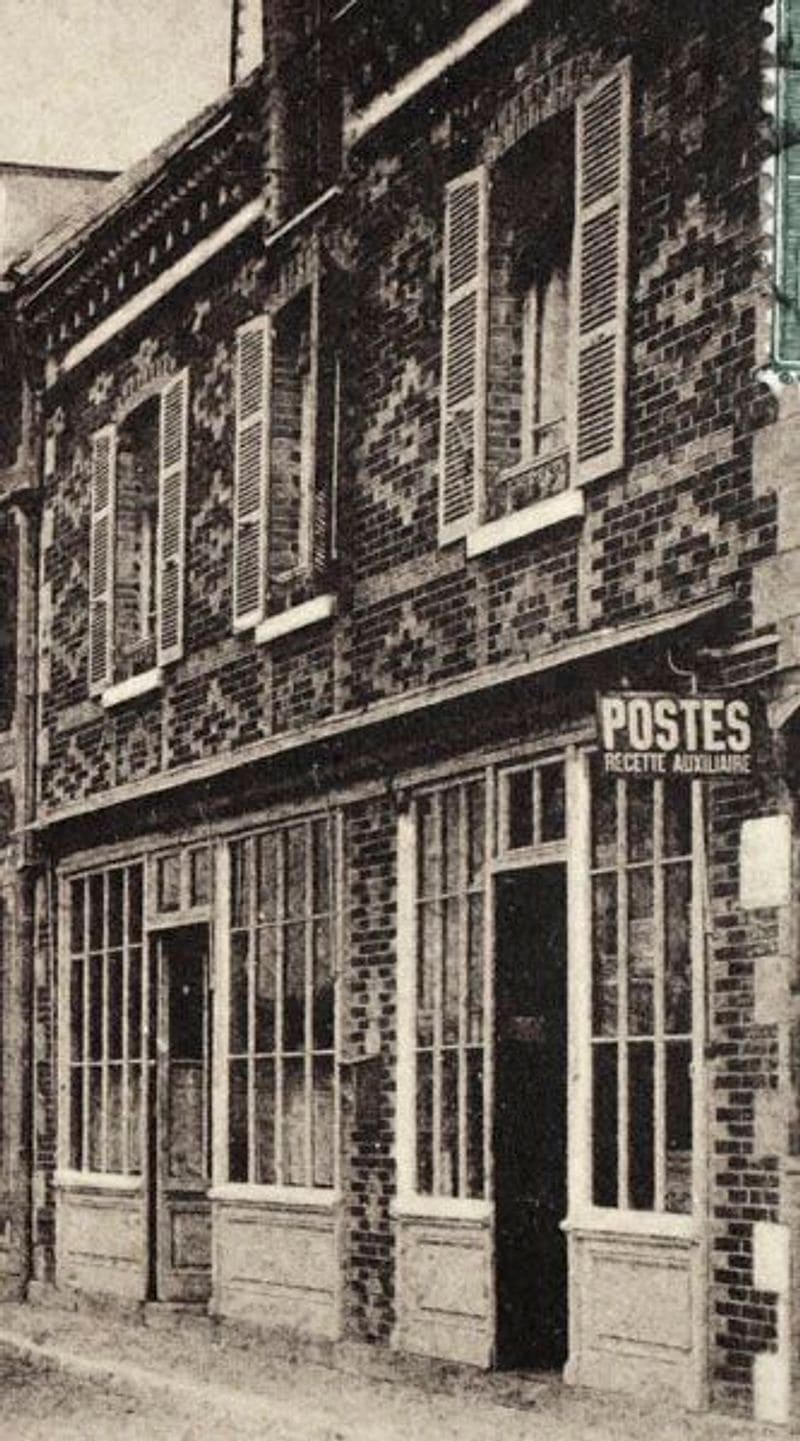
Period photograph of a brick shopfront bearing the sign “Postes — Recette auxiliaire”
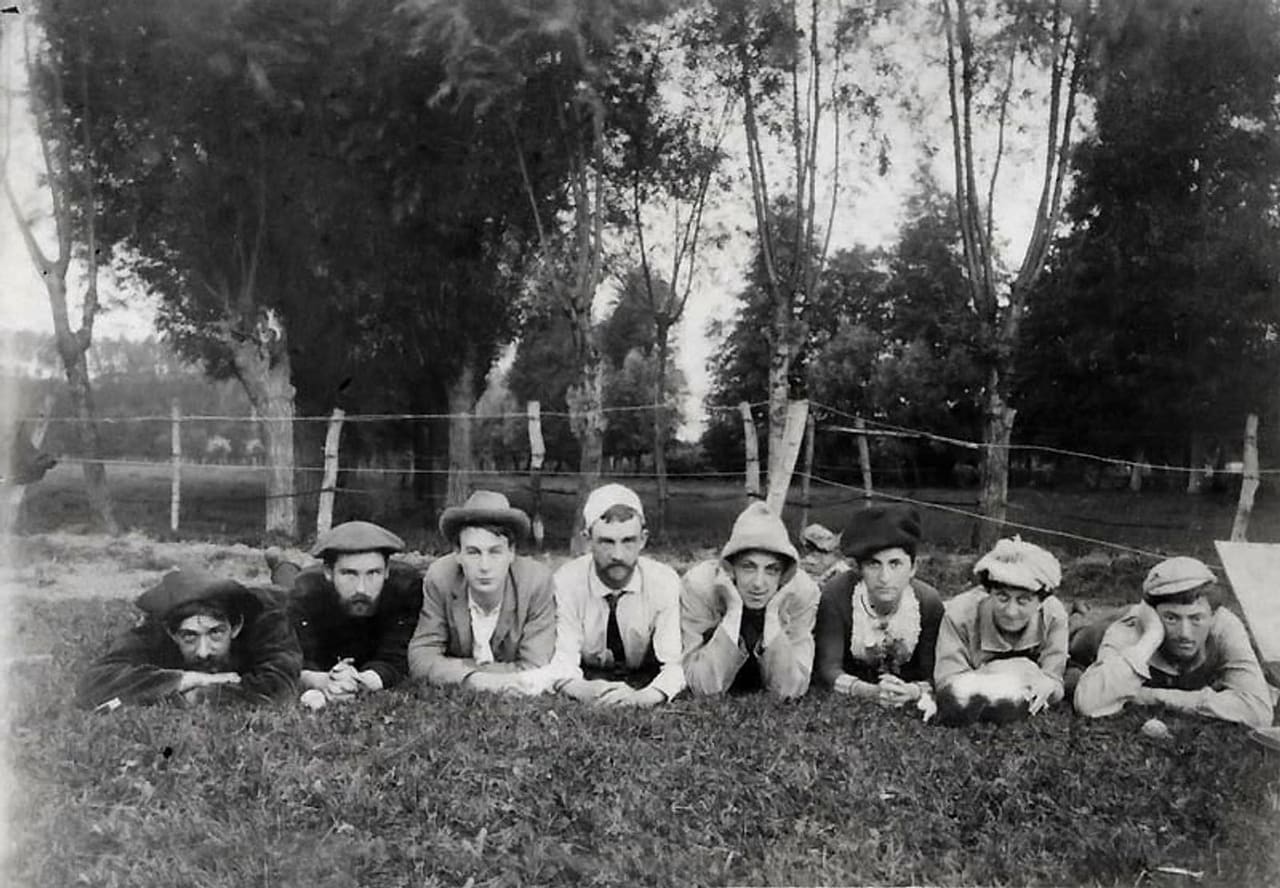
Period photograph: eight men lying in a meadow lined with poplars

Giverny — Normandy

One house, one history

A few hundred metres from Claude Monet’s house stands a village building that became a meeting place for painters. People slept, painted, argued and exhibited here; they left canvases, letters and signatures behind.

This site gathers what remains of that history: photographs, postcards, documents and accounts, presented as the pieces of an archive open to the public.

Every document published here carries its date, provenance and credit where these are established — and says so where they are not.

Discover the history of Baudy

Portraits

The artists of Giverny

Painters, sculptors and travellers who came to Giverny in search of a new light.

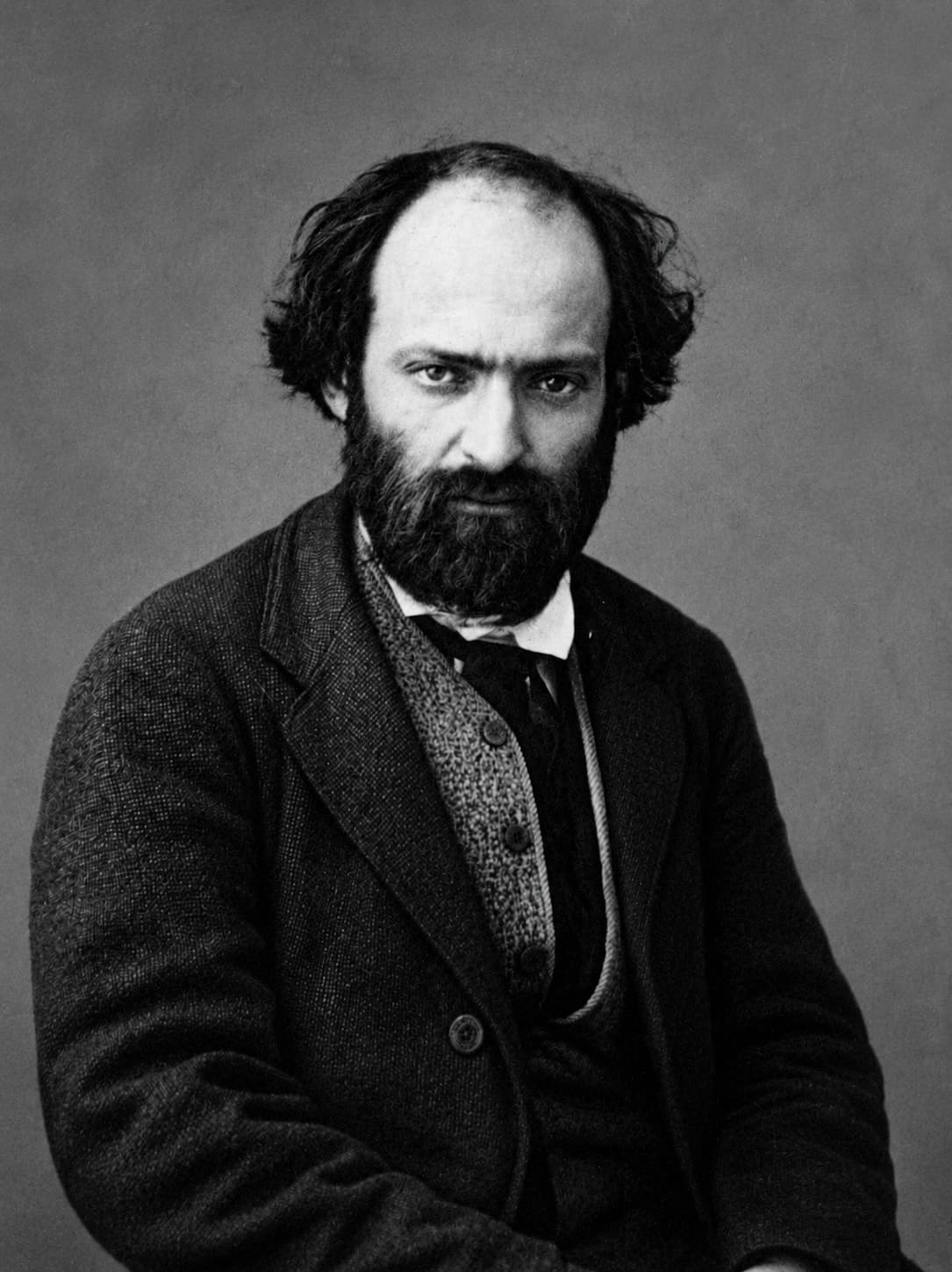
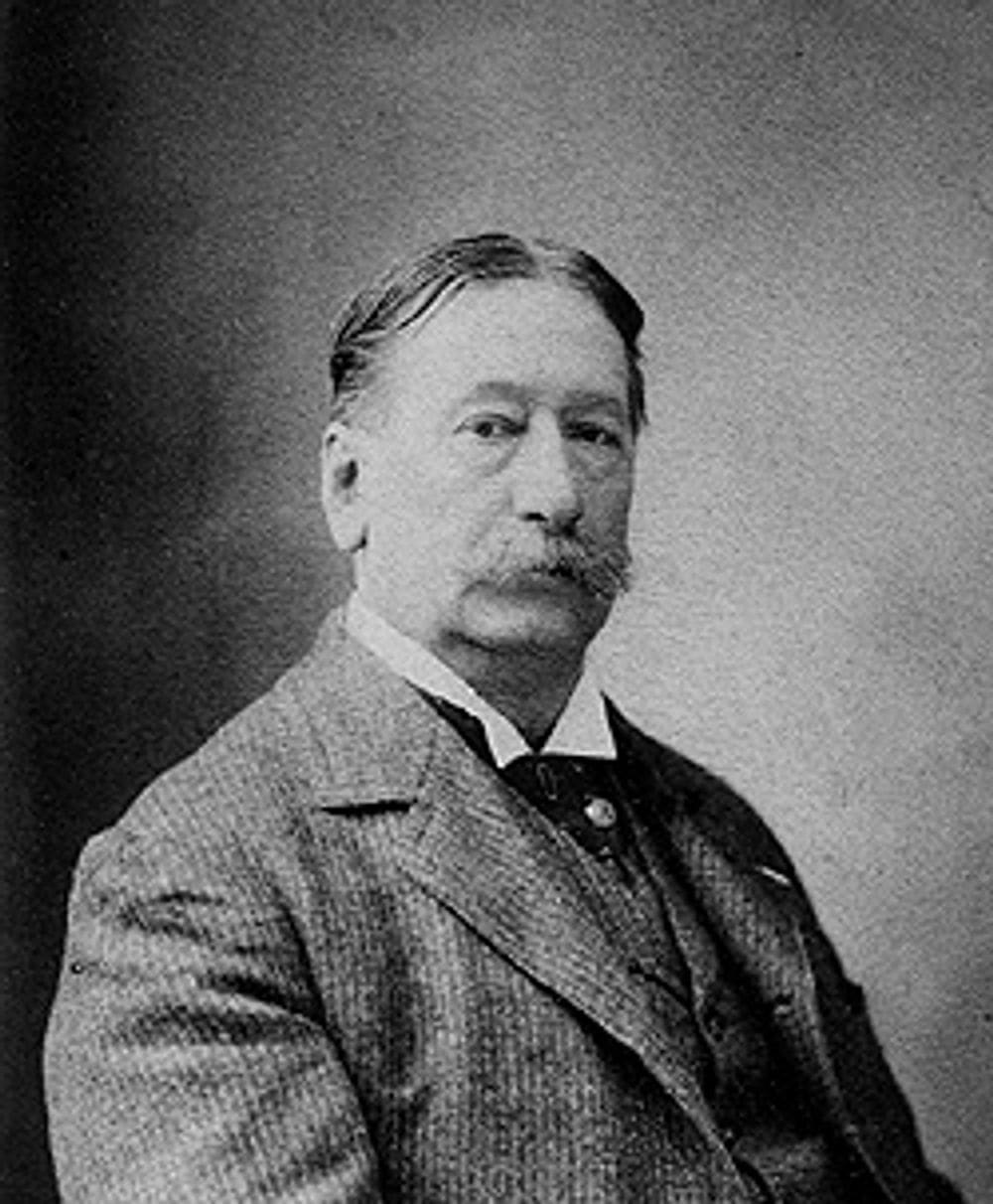
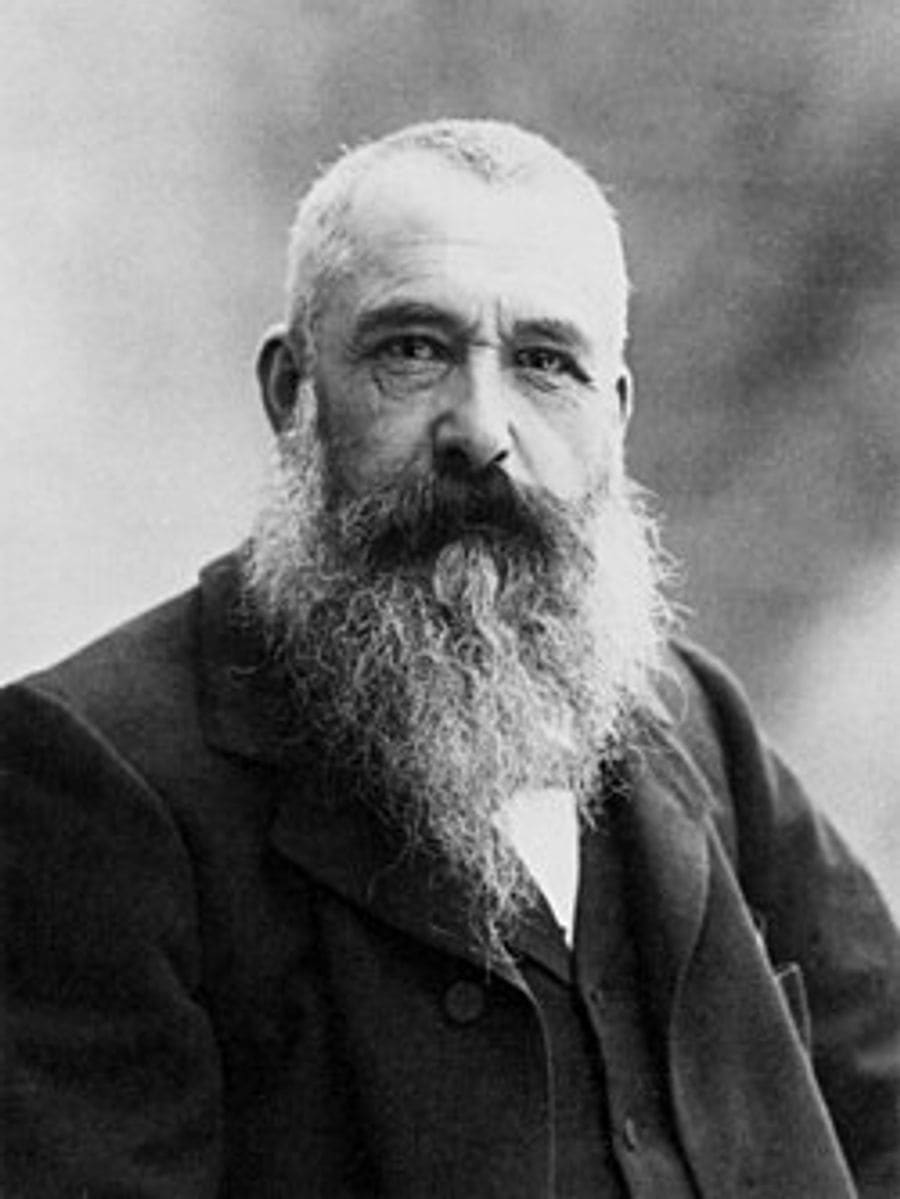
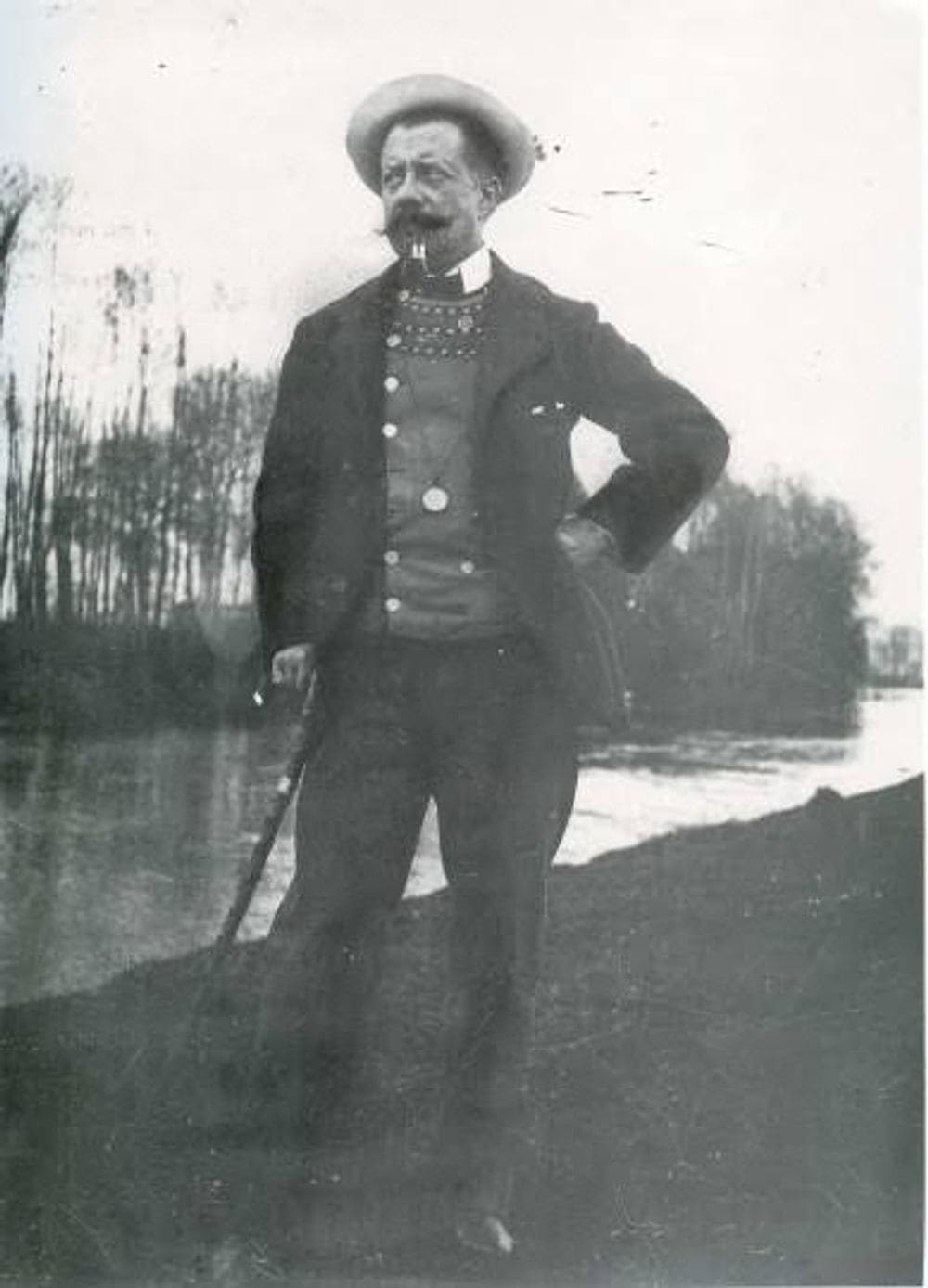
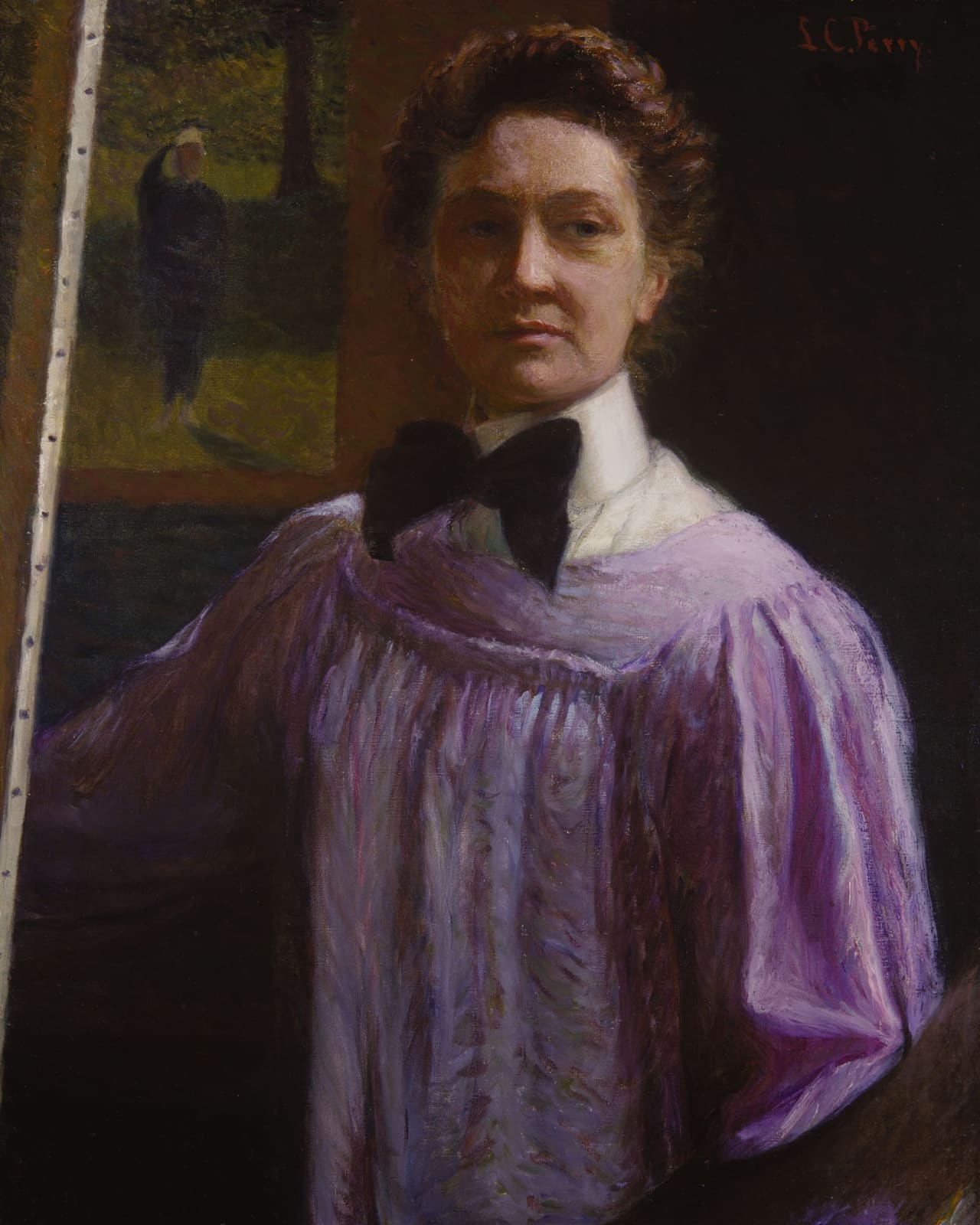
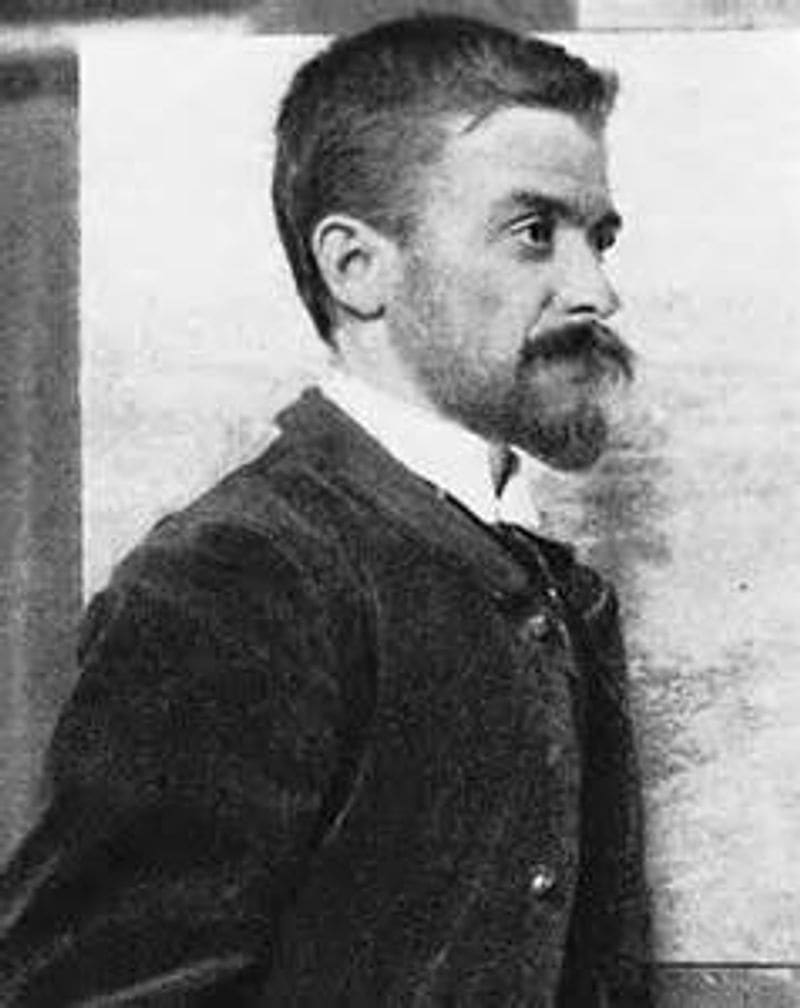
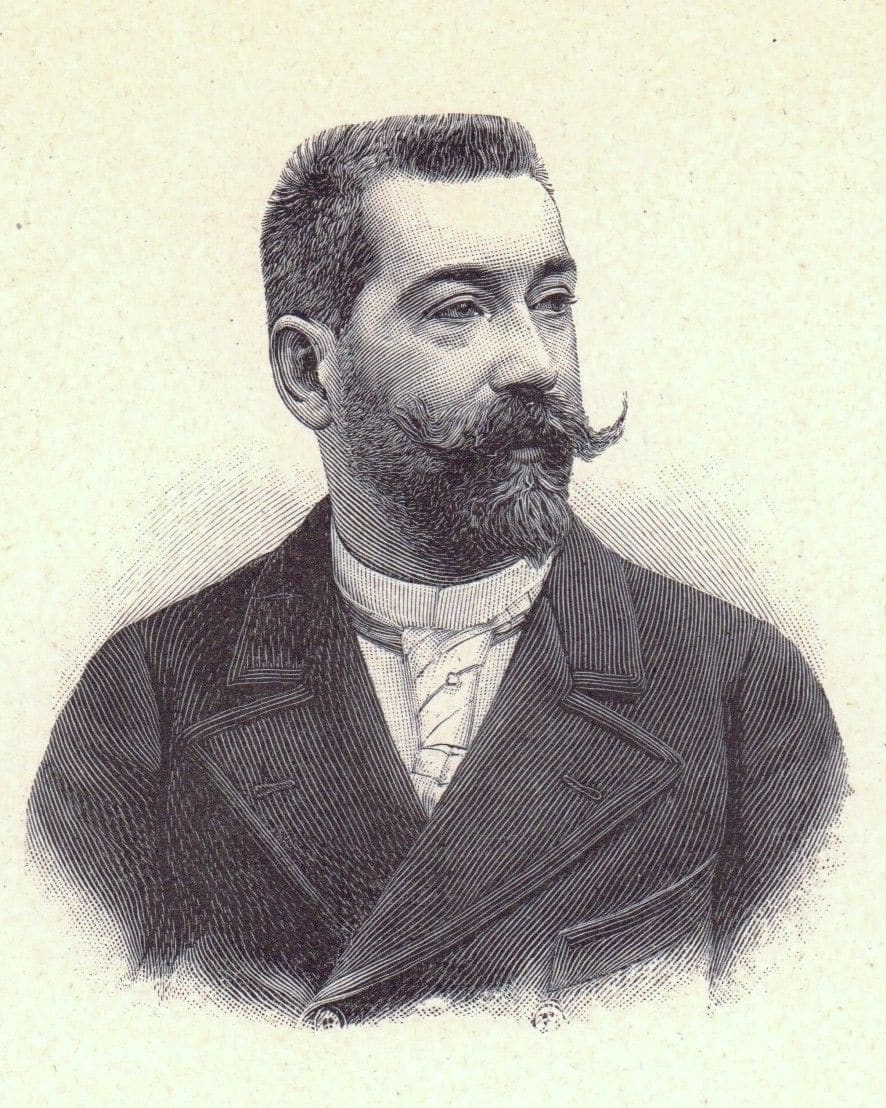
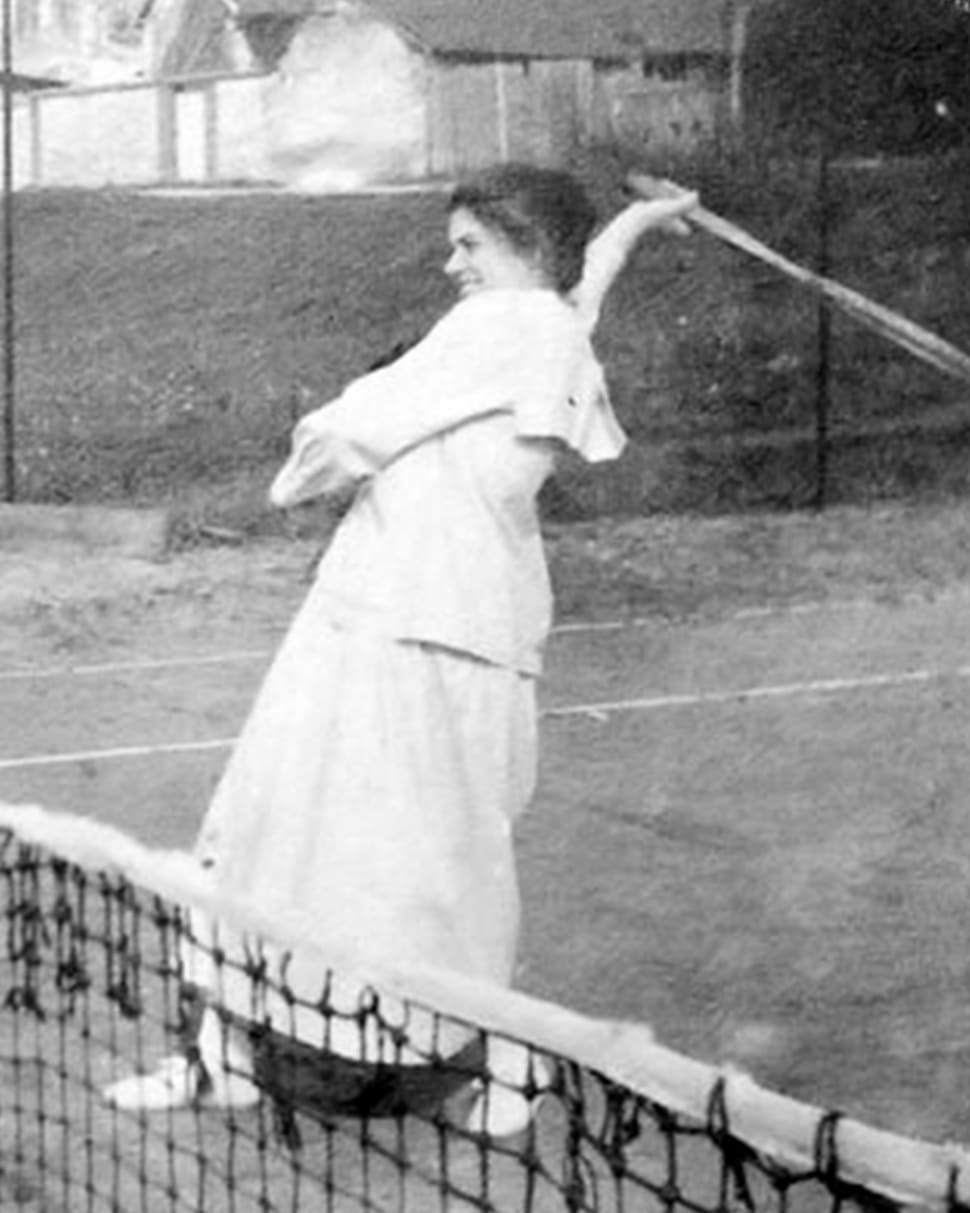
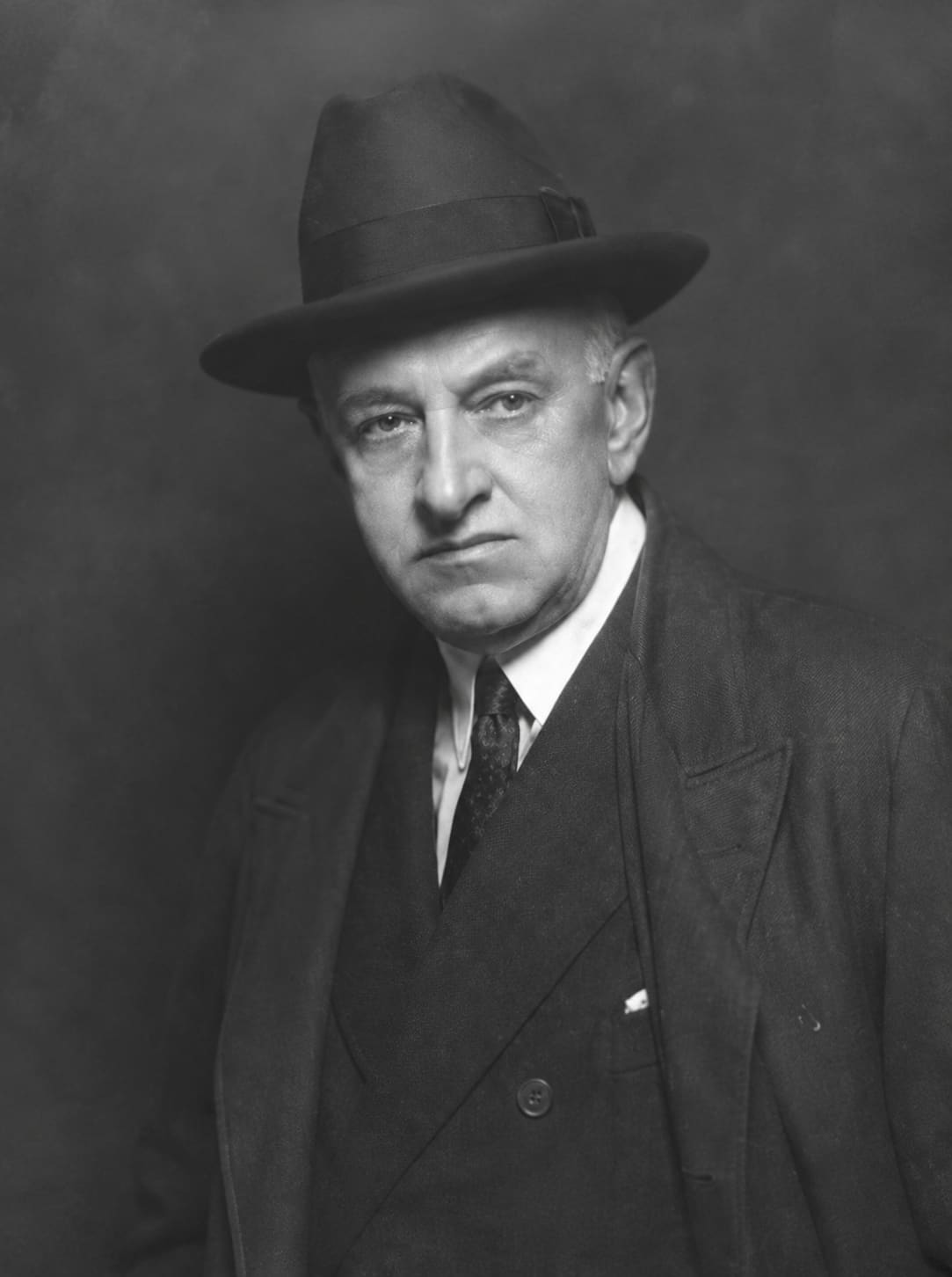
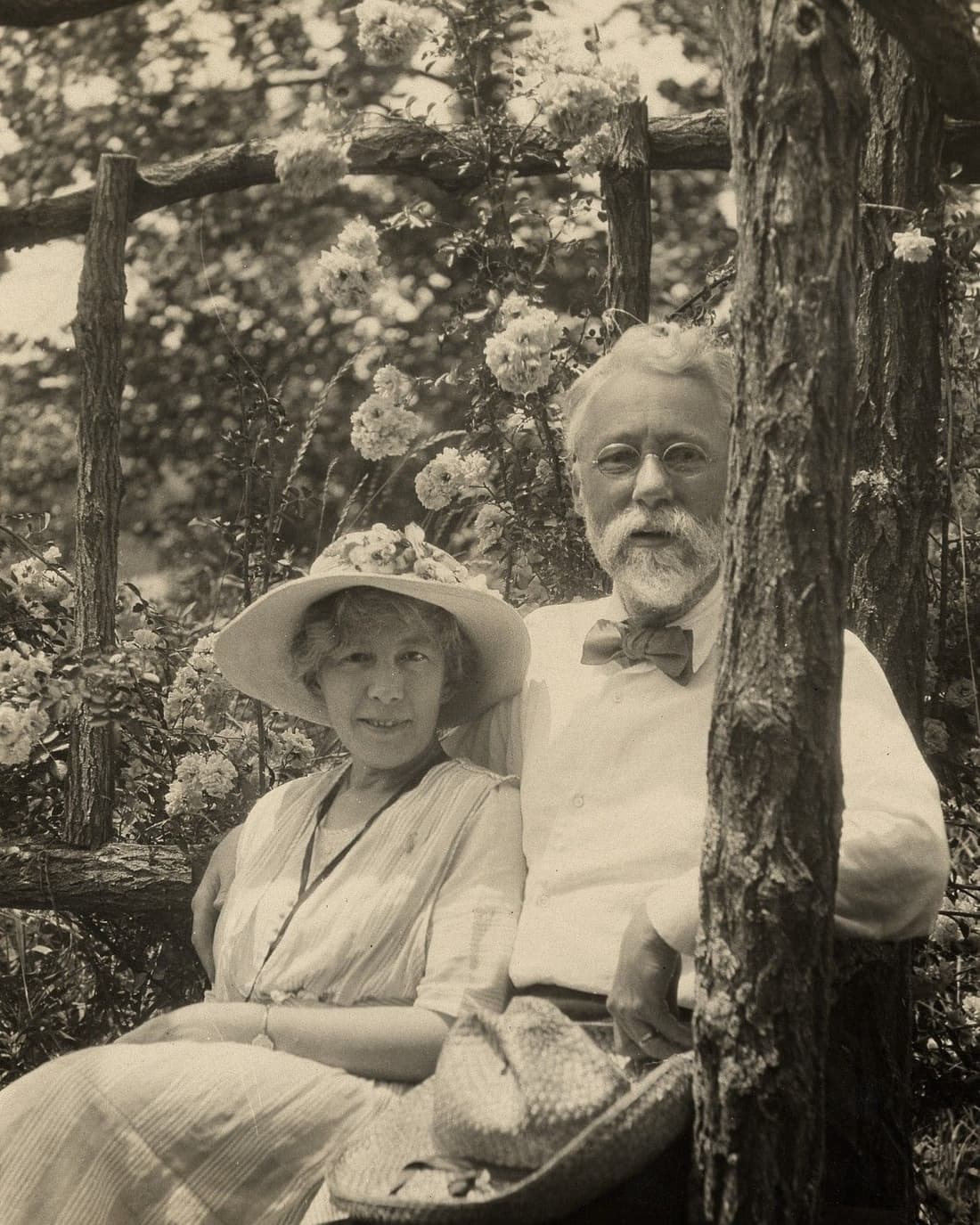
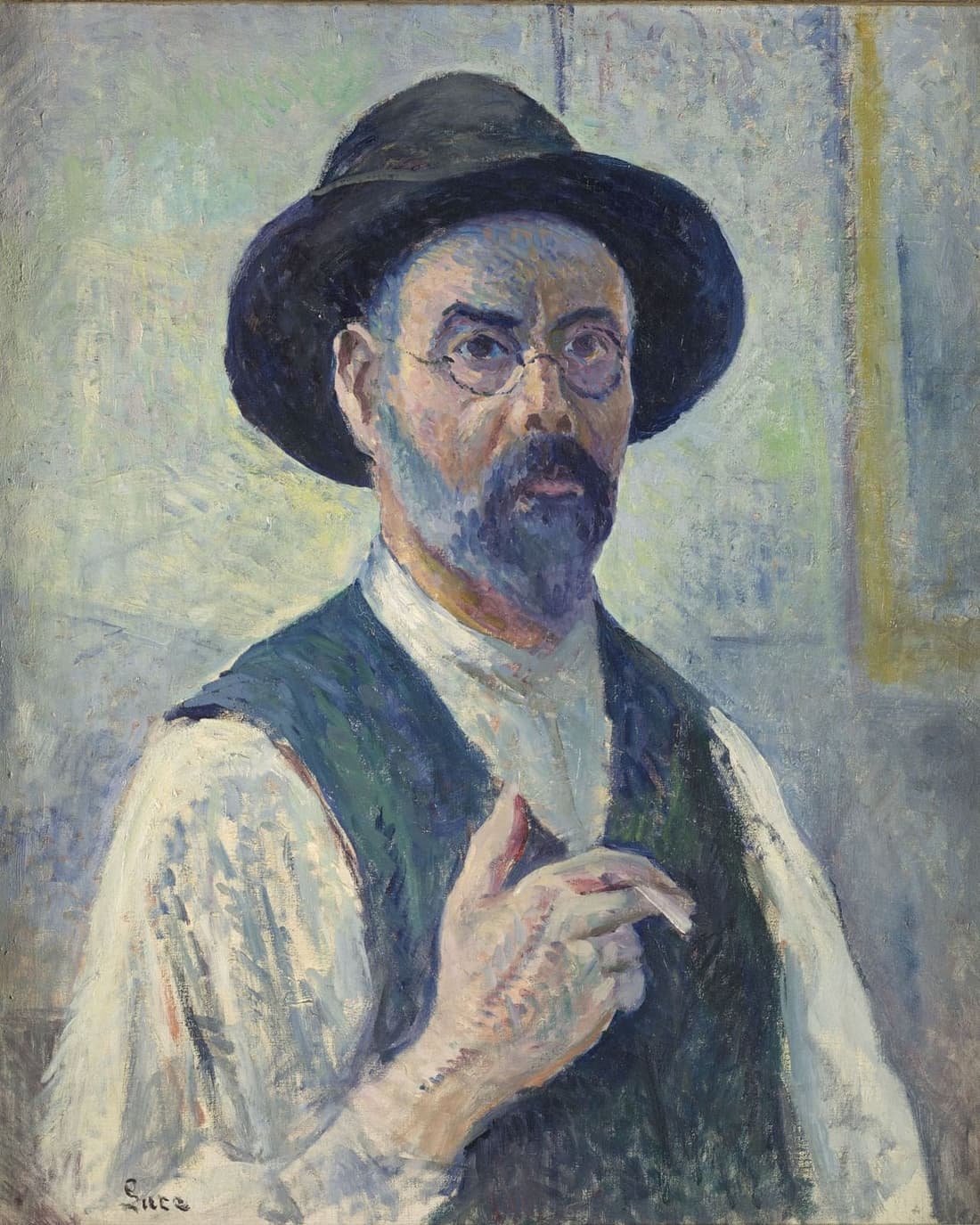
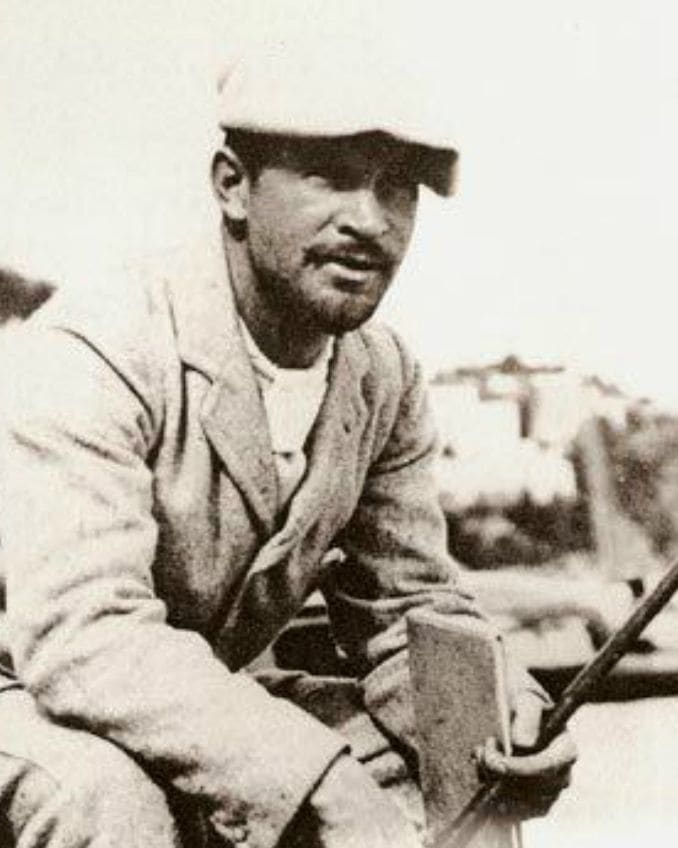
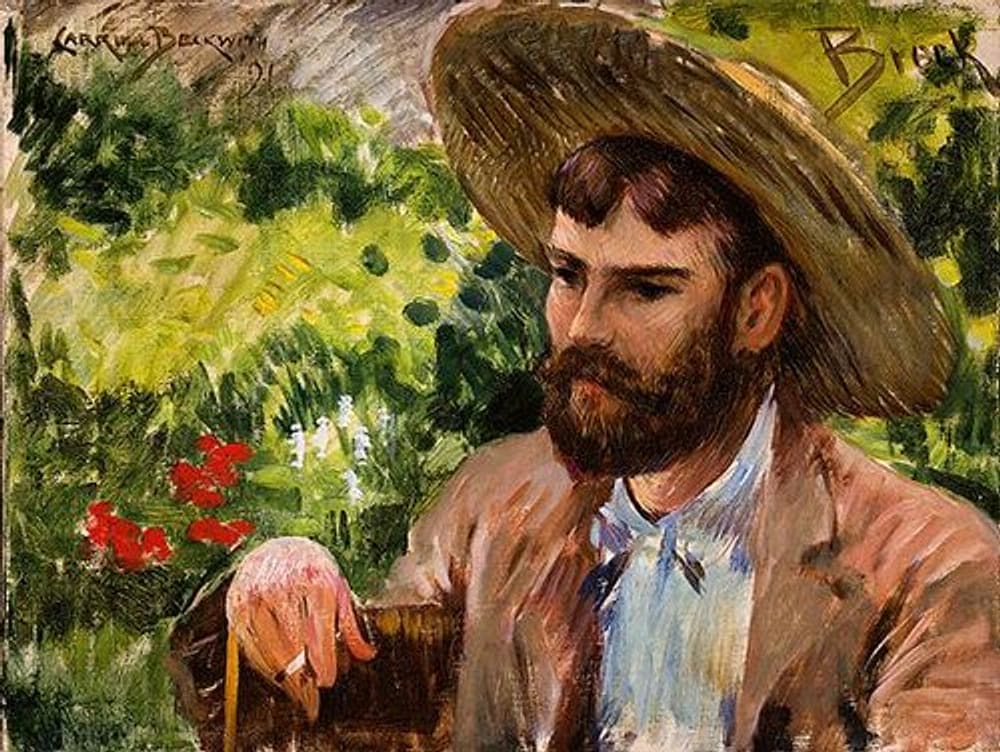
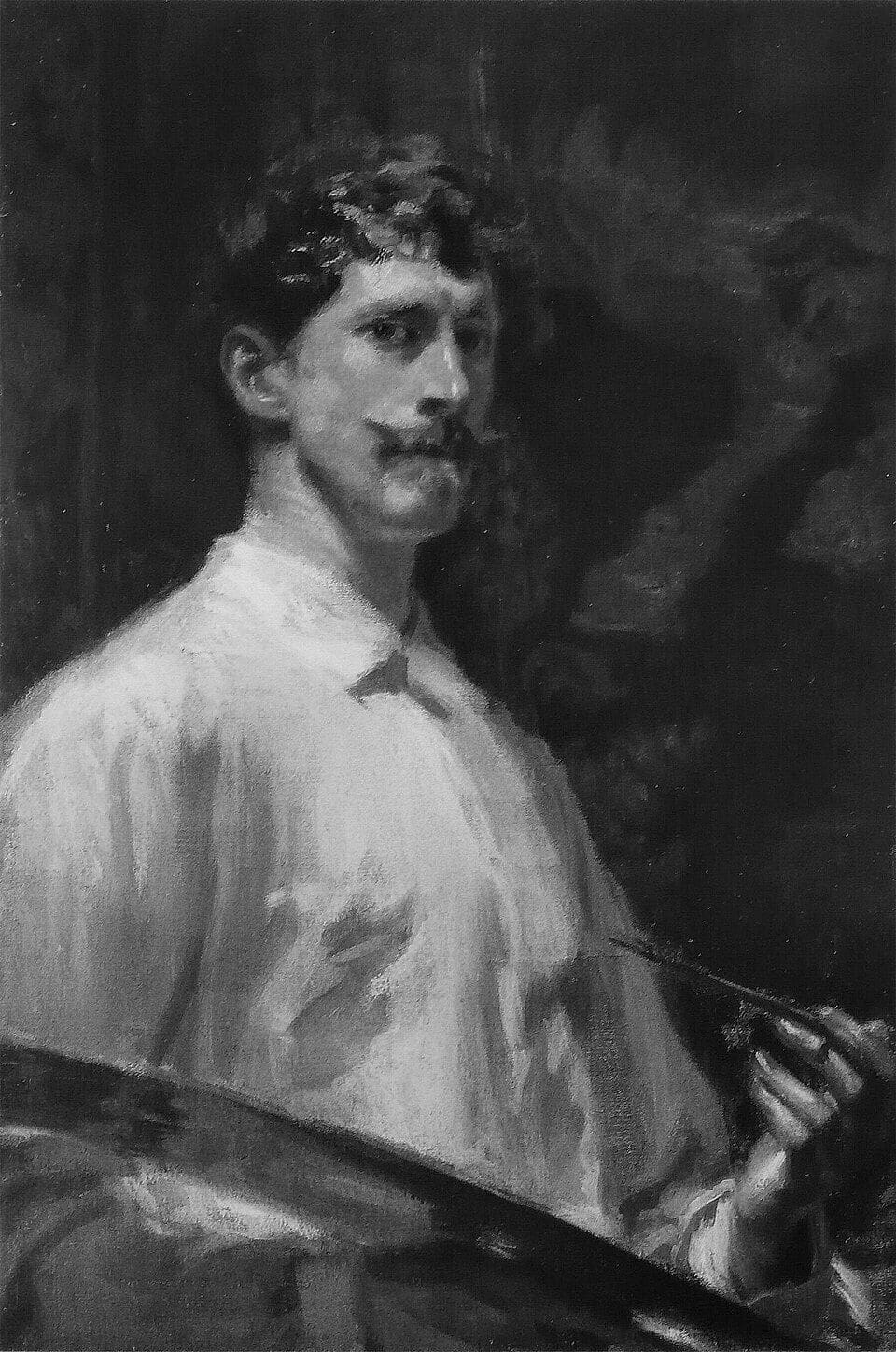
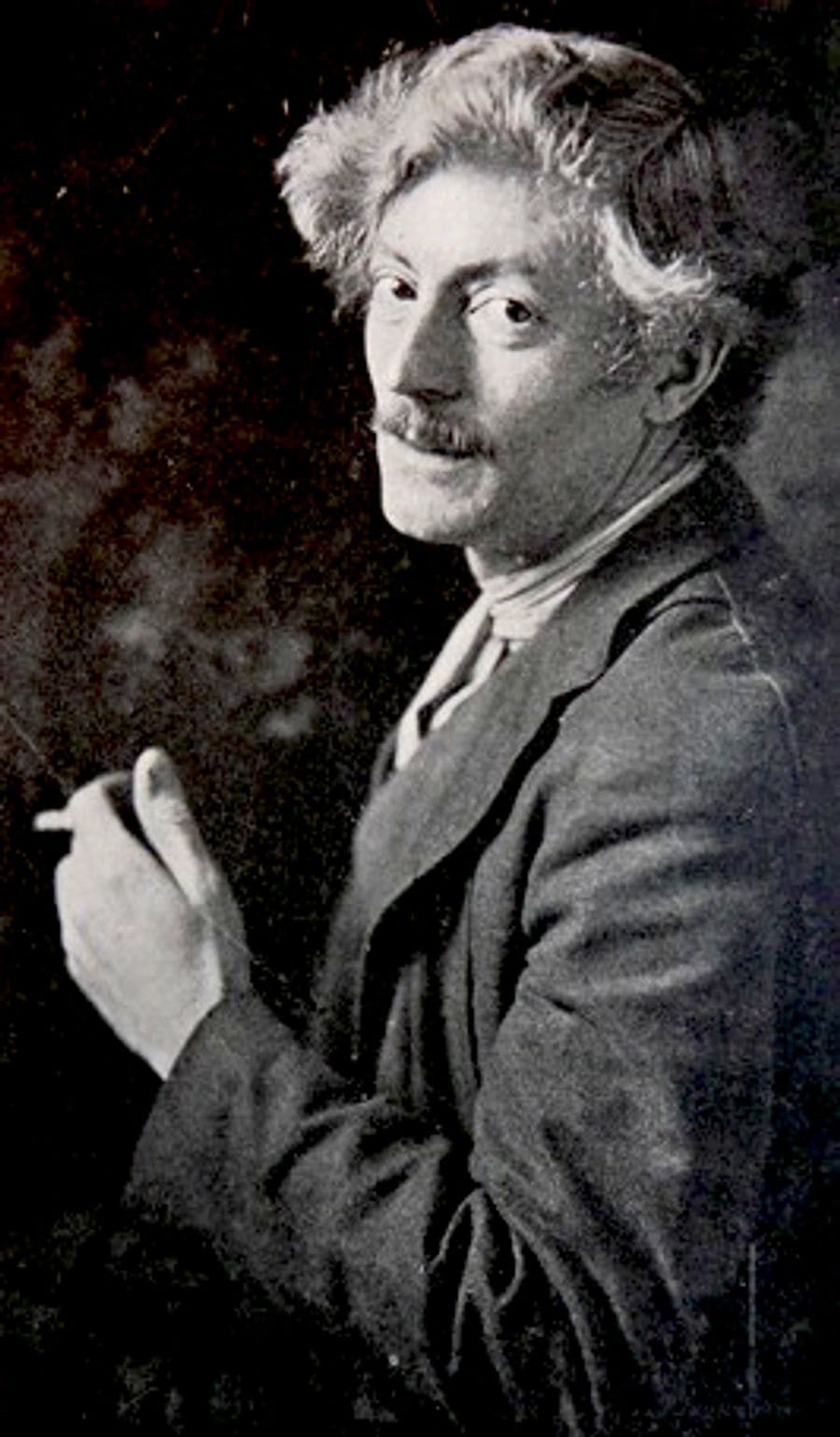
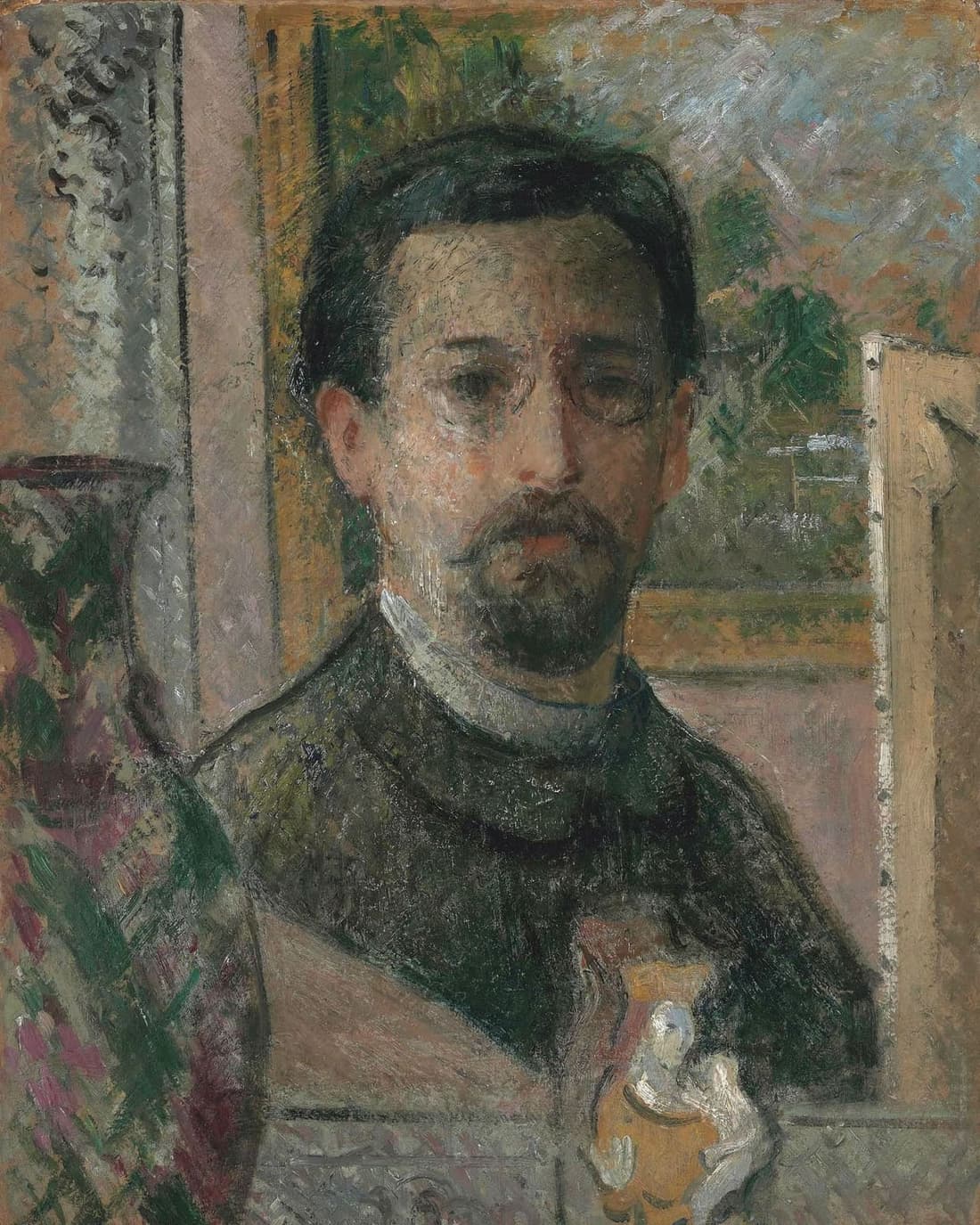
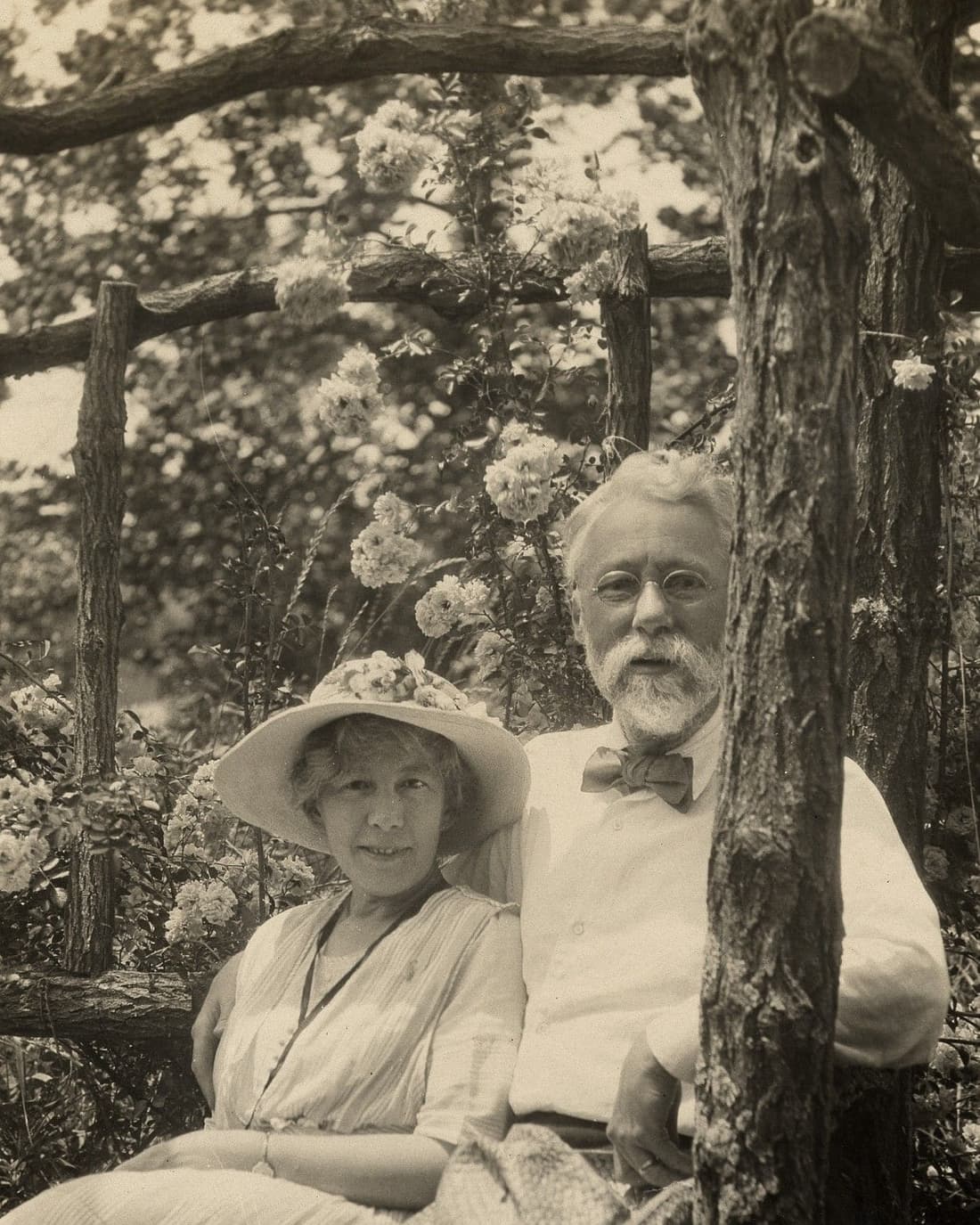
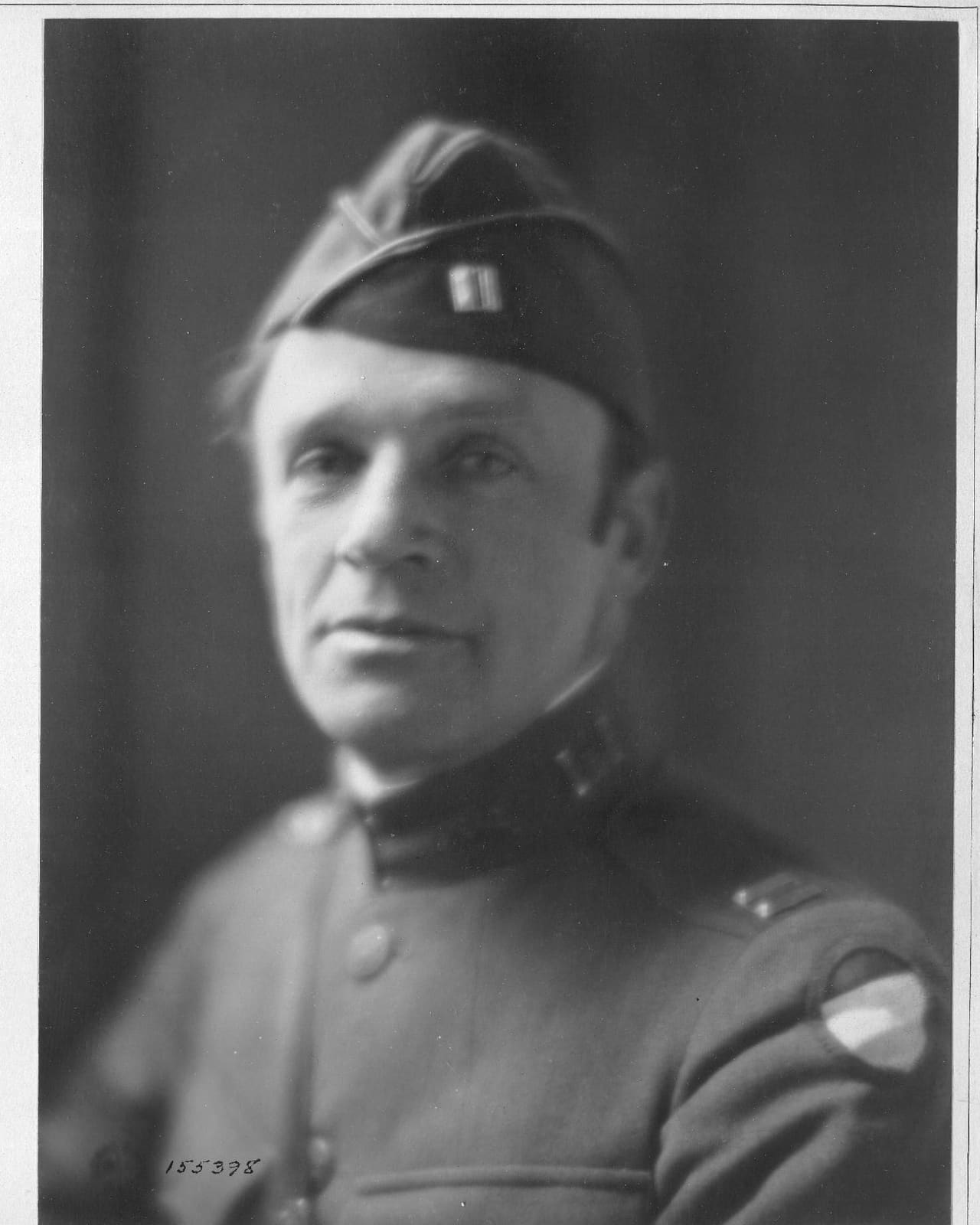
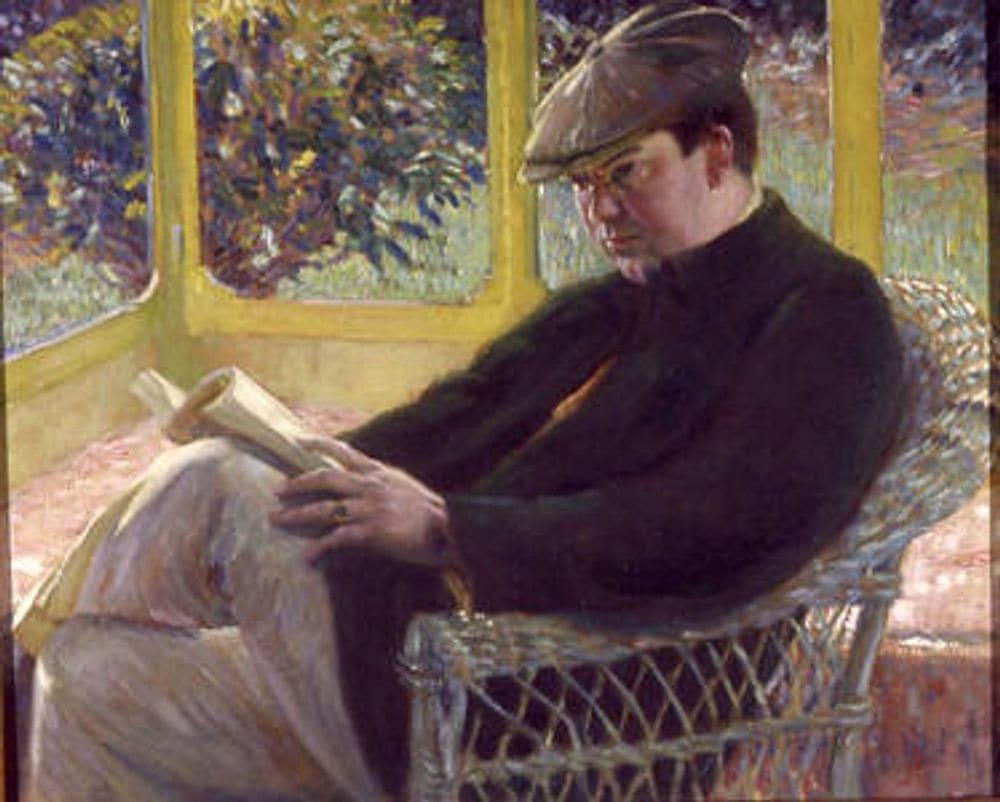
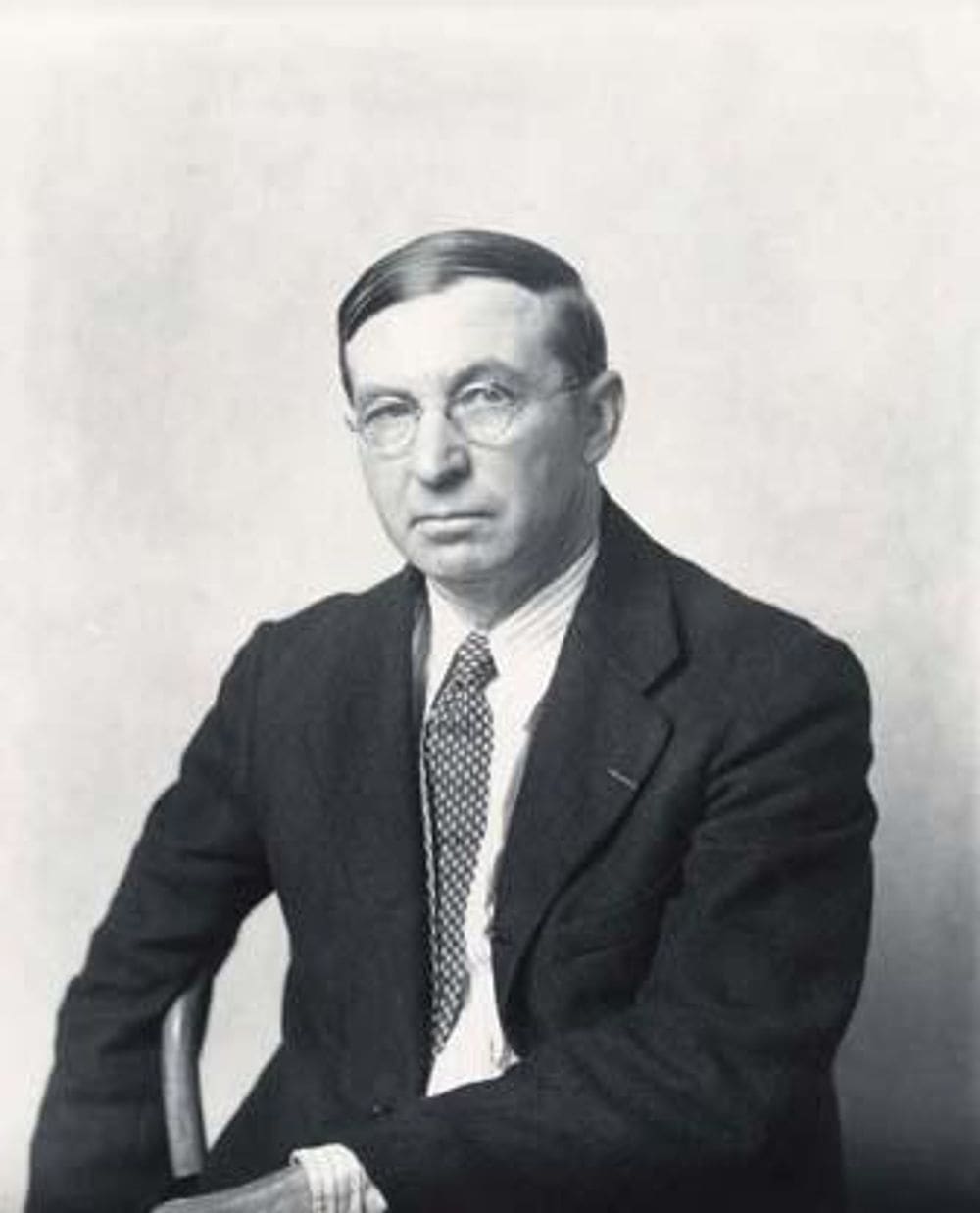
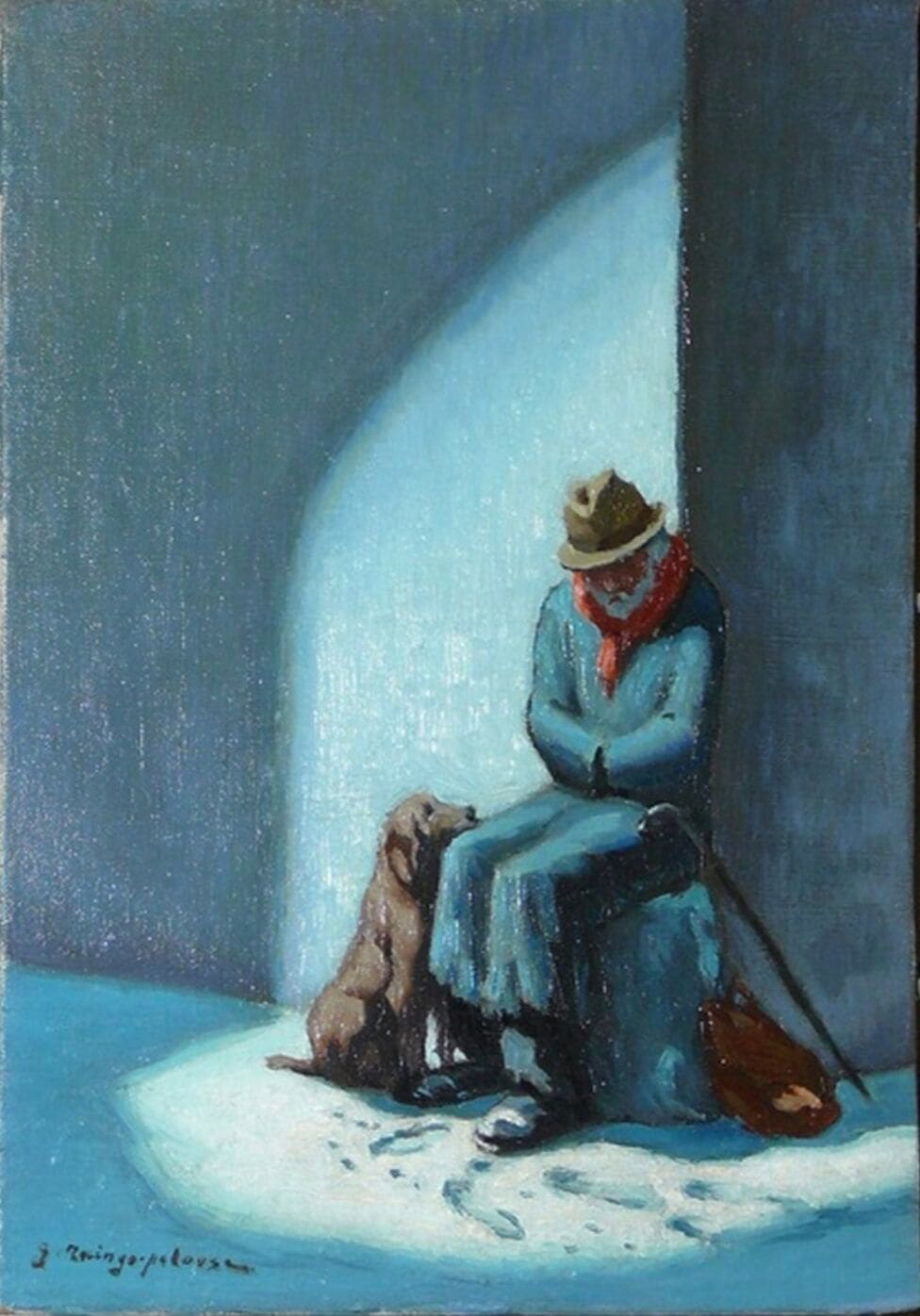
Portrait of Léon Germain Pelouse Discover Léon Germain Pelouse 1838 — 1891 French · Landscape painter Leader of the Cernay school, a plein-air landscape painter in the line of Corot and Daubigny. Portrait of Paul Cézanne Discover Paul Cézanne 1839 — 1906 French · Painter He stayed at the Hôtel Baudy in the autumn of 1894, at Monet’s invitation, and painted several views of the village there. Portrait of Daniel Ridgway Knight Discover Daniel Ridgway Knight 1839 — 1924 American · Painter An American painter of French peasant women, settled at Poissy and then Rolleboise, on the Seine. Portrait of Claude Monet Discover Claude Monet 1840 — 1926 French · Painter His arrival in Giverny is the most frequently cited starting point of the village’s reputation. Portrait of Hippolyte Camille Delpy Discover Hippolyte Camille Delpy 1842 — 1910 French · Landscape painter A pupil of Daubigny and Corot, he forms the link between Barbizon and Impressionism. Portrait of Lilla Cabot Perry Discover Lilla Cabot Perry 1848 — 1933 American · Painter She stayed regularly in Giverny between 1889 and 1909 and made Impressionism known in America. Portrait of Theodore Robinson Discover Theodore Robinson 1852 — 1896 American · Painter The closest to Monet: a true friendship, and one of the deepest assimilations of French Impressionism. Portrait of Paul Charles Chocarne-Moreau Discover Paul Charles Chocarne-Moreau 1855 — 1930 French · Genre painter A Parisian genre painter, known for scenes of children in the working trades. Portrait of Mary Fairchild MacMonnies Discover Mary Fairchild MacMonnies 1858 — 1946 American · Painter A painter of figures and gardens, active in France for more than twenty years. Portrait of Willard Leroy Metcalf Discover Willard Leroy Metcalf 1858 — 1925 American · Painter Often described as the man through whom Giverny became known to the painters of the Académie Julian. Portrait of Robert William Vonnoh Discover Robert William Vonnoh 1858 — 1933 American · Painter and teacher American painter and teacher, whose great poppy field of 1888 is associated with Giverny. Portrait of Maximilien Luce Discover Maximilien Luce 1858 — 1941 French · Painter and printmaker A Neo-Impressionist settled at Rolleboise, he was a frequent visitor to Monet, who lived nearby. Portrait of William Blair Bruce Discover William Blair Bruce 1859 — 1906 Canadian · Painter One of the very first North American painters to settle in Giverny, from the 1887 season. Portrait of John Leslie Breck Discover John Leslie Breck 1860 — 1899 American · Painter One of the first Americans to adopt Impressionism and win it acceptance in the United States. Portrait of Frederick William MacMonnies Discover Frederick William MacMonnies 1863 — 1937 American · Sculptor and painter An internationally renowned sculptor, he also ran a teaching studio in Normandy. Portrait of Dawson Dawson-Watson Discover Dawson Dawson-Watson 1864 — 1939 British, active in the United States · Painter The Hôtel Baudy lodger whose stay is dated most precisely: entered in the register on 12 May 1888. Portrait of Gustave Loiseau Discover Gustave Loiseau 1865 — 1935 French · Painter A Post-Impressionist known for his “trellis” brushwork and his landscapes of the Eure valley. Portrait of Václav Radimský Discover Václav Radimský 1867 — 1946 Czech · Landscape painter The most Impressionist of Czech painters, settled near Vernon for nearly thirty years. Portrait of Ernest Clifford Peixotto Discover Ernest Clifford Peixotto 1869 — 1940 American · Painter, illustrator and muralist An American illustrator and muralist, settled in France from 1888 to 1914, a friend of Theodore Robinson. Portrait of Louis Aston Knight Discover Louis Aston Knight 1873 — 1948 American · Painter A painter of Norman rivers, settled at Beaumont-le-Roger in the Eure. Portrait of Frederick Carl Frieseke Discover Frederick Carl Frieseke 1874 — 1939 American · Painter Settled lastingly in Giverny, he painted women in gardens and light filtered through foliage. Portrait of Richard Edward Miller Discover Richard Edward Miller 1875 — 1943 American · Painter Elegant women reading or walking in flowering gardens, in a highly refined palette. Son seul ami, a work by Germain Raingo-Pelouse Discover Germain Raingo-Pelouse 1893 — 1963 French · Painter A landscape painter of the Seine at Vernonnet, a few kilometres from Giverny, and a relative of Claude Monet by marriage.

All the artists

Timeline

More than a century of history

The main stages of the house and of the artists’ colony, to be completed as research advances.

Scroll horizontally to browse the timeline

1869

Baudy fils, sewing machines

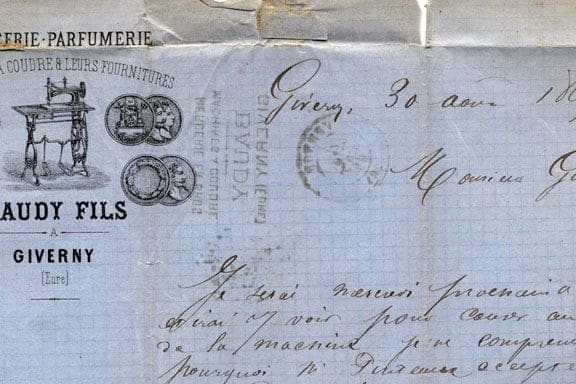
Before the hotel, and before even the grocery as it is usually imagined, the house was a haberdashery and sewing-machine business. A letter on engraved paper dated 30 April 1869, and an envelope cancelled at Vernon the same year, carry its trading name: “BAUDY FILS à Giverny”.

Baudy fils, sewing machines

1883

Claude Monet settles in Giverny

The painter’s arrival in the village shortly precedes that of the foreign artists. Monet never lodged with the Baudys, and nothing attests that he himself sent visitors there: it was his presence alone in the village that drew the painters.

Claude Monet settles in Giverny

1886

Willard Metcalf pushes open the door

The house was then a village shop: grocery, haberdashery, bar. Willard Metcalf, an American painter from Massachusetts, arrived that year aged twenty-six — the Peers de Nieuwburgh collection gives him as the first of the Americans, and relates that Angélina Baudy nearly turned him away before she saw his painting kit. The guest register, which begins only in 1887, cannot confirm the date.

Willard Metcalf pushes open the door

June 1887

The hotel opens

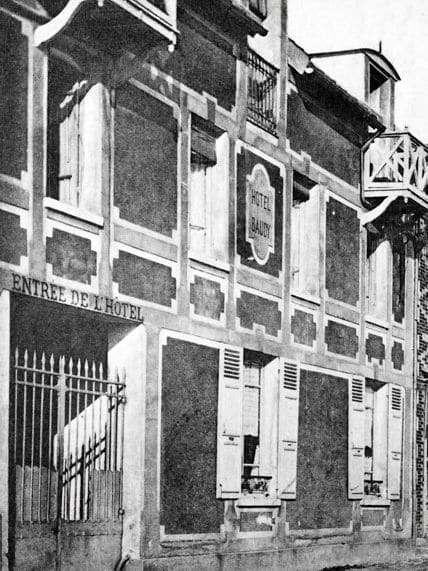
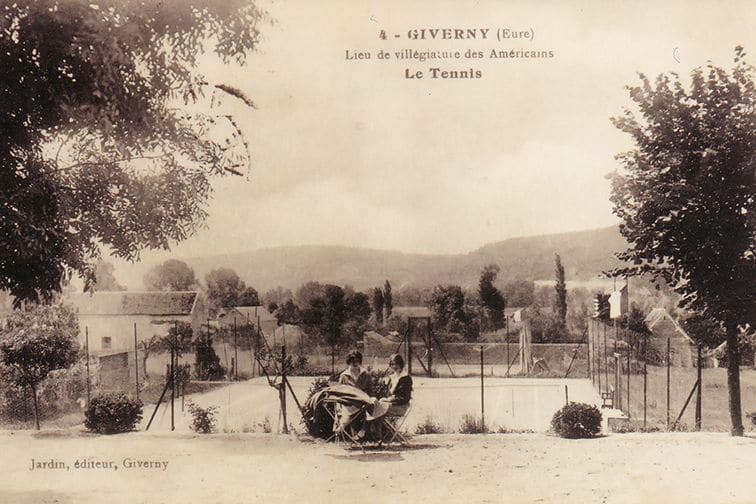
Angélina and Lucien Baudy opened the hotel in June 1887: cheap rooms, a studio in the garden, a tennis court. The guest register was started the same year — it would run until 1899 and hold some seven hundred entries. Back at the Académie Julian, Metcalf had spread word of the village; John Leslie Breck arrived with a small group of expatriates. The American colony was born.

The hotel opens

1887 — 1891

The first hotel in France fitted out for painters

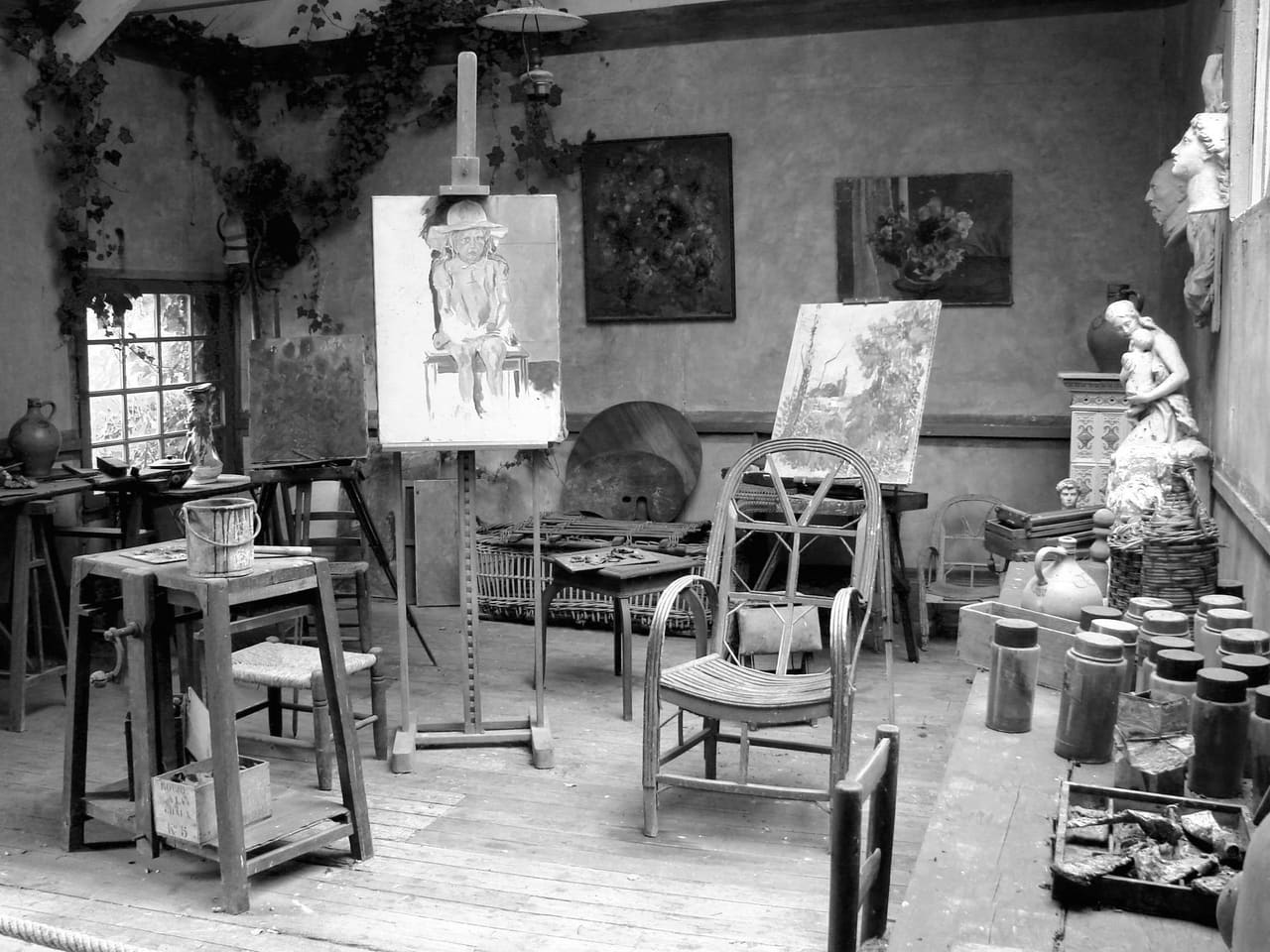
Angélina Baudy transformed the business. The studio was built in the garden in 1887 — a free-standing pavilion with a north-facing skylight; the Peers de Nieuwburgh collection credits the initiative to Theodore Robinson. Two more studios were fitted under the roof in 1890. Then came some twenty bedrooms and a large corner terrace. Lucien’s sewing-machine workshop became the ballroom. According to that same source the house was then the first establishment in France fitted out specially for painters. Of the three studios, only the garden one survives.

The first hotel in France fitted out for painters

1893

The house supplies the commune

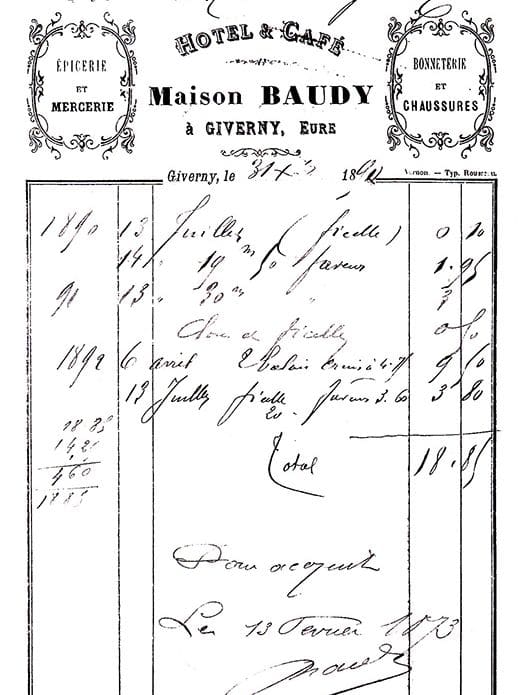
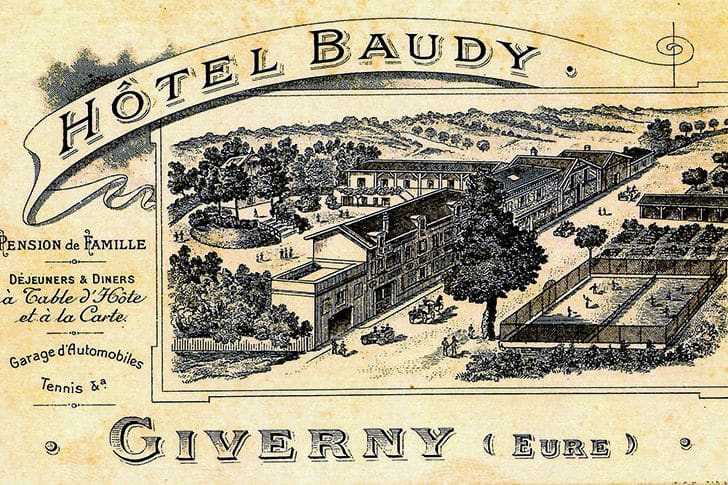
An invoice receipted on 15 February 1893 itemises supplies delivered to the Giverny town hall between 1890 and 1892, for eighteen francs fifteen. The letterhead says what the house then was: “Hôtel & Café — Maison Baudy”, grocery and haberdashery, hosiery and footwear. The hotel had not replaced the shop: it had been added to it.

The house supplies the commune

Autumn 1894

Paul Cézanne’s stay

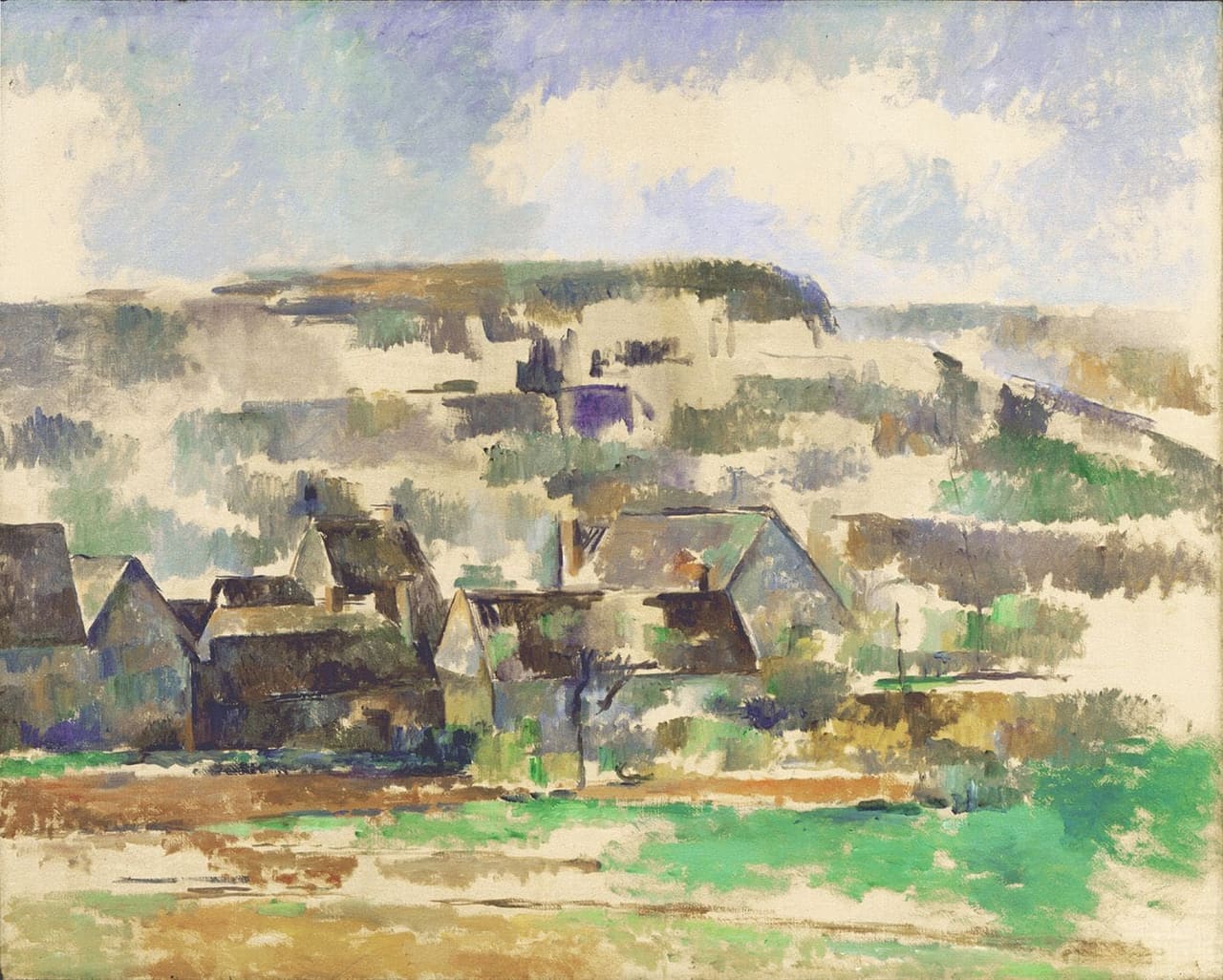
Invited by Monet, Cézanne lodged at the Hôtel Baudy from 30 September to 28 November. Mary Cassatt was staying at the same time; the American painter Matilda Lewis sketched his portrait there. Two known canvases came of it: “Paysage d’hiver (Giverny)”, 65 × 55 cm, now at the Philadelphia Museum of Art, and “Giverny (hôtel Baudy)”, 65 × 81 cm, in a private collection — the latter painted from the corner terrace of the house. The Société Cezanne relates that he left Giverny abruptly, convinced he was being mocked by the friends Monet had gathered to support him, abandoning several canvases at the inn.

Paul Cézanne’s stay

1887 — 1920

An international artistic crossroads

For more than thirty years the house brought together painters, sculptors, engravers and writers from the United States, Canada, Britain, Australia and Europe. Masquerade balls, games of billiards, exhibitions hung in the dining room: the Smithsonian Institution gives 1887-1920 as the period of family management. The end of it is less clear-cut than it looks, however — the Giverny sources still show Angélina serving in the house, with her daughter-in-law Clarisse, in the 1930s, by which time the sign already bore the Evans name.

An international artistic crossroads

1898 — 1911

The musical and theatrical evenings

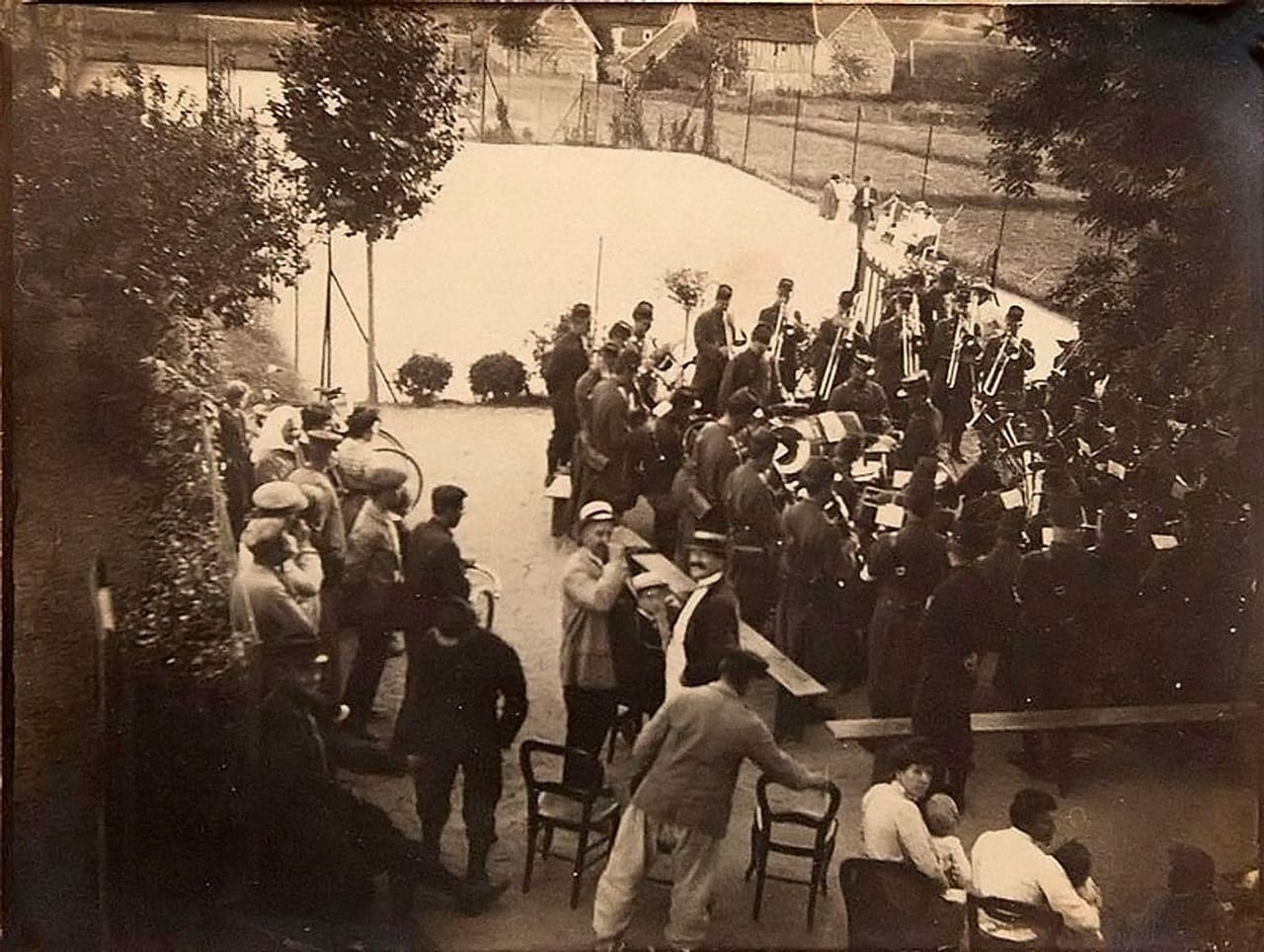
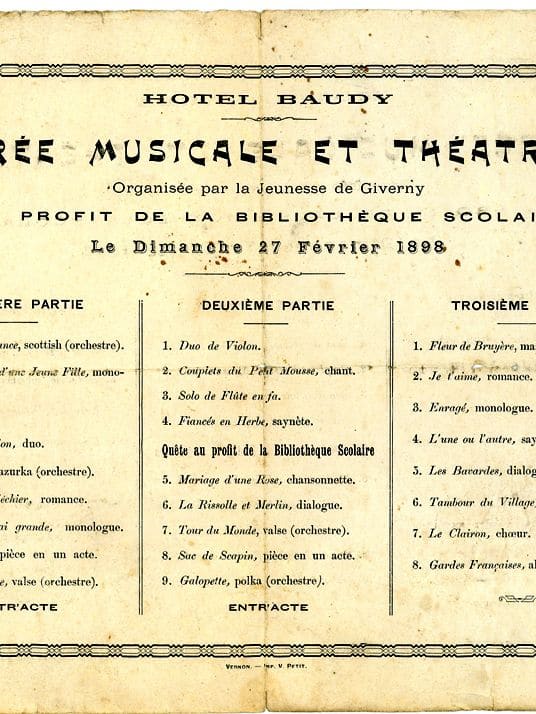
Four printed programmes survive. The young people of Giverny gave their evenings at the Hôtel Baudy on 27 February 1898 and 4 February 1900 in aid of the school library, then on 27 February 1910 and 30 April 1911 in aid of the Société de Tir. Orchestra, monologues, songs, one-act comedies: the house was also the village hall.

The musical and theatrical evenings

August 1908

A photograph bearing its own date

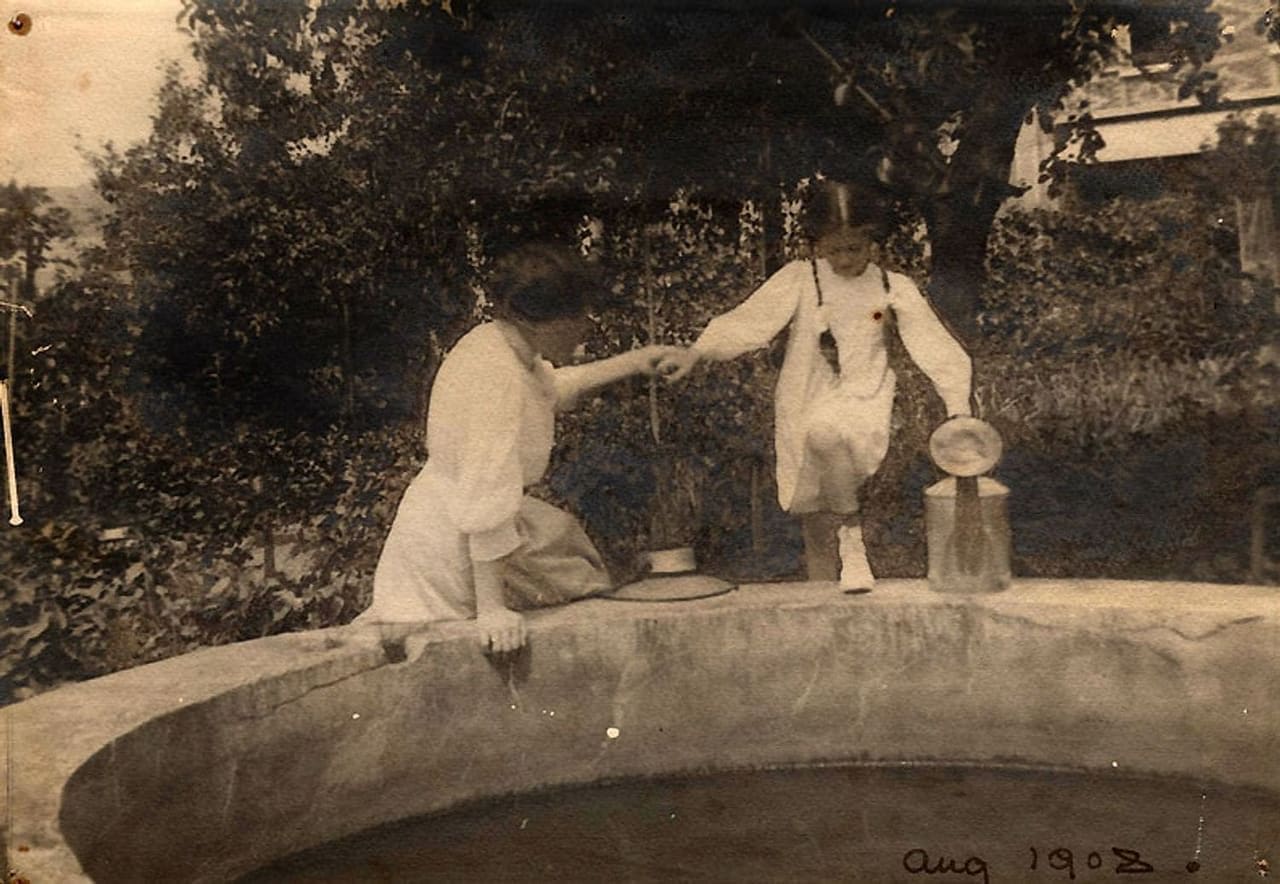
Two people pose on either side of the circular pool in a wood. A handwritten note can be read at the foot of the print: “Aug 1908”. It is the only item in the collection bearing its own date.

A photograph bearing its own date

1914 — 1918

The First World War

The war dispersed the American colony at Giverny and largely brought the period to an end.

The First World War

1930

Christmas Eve

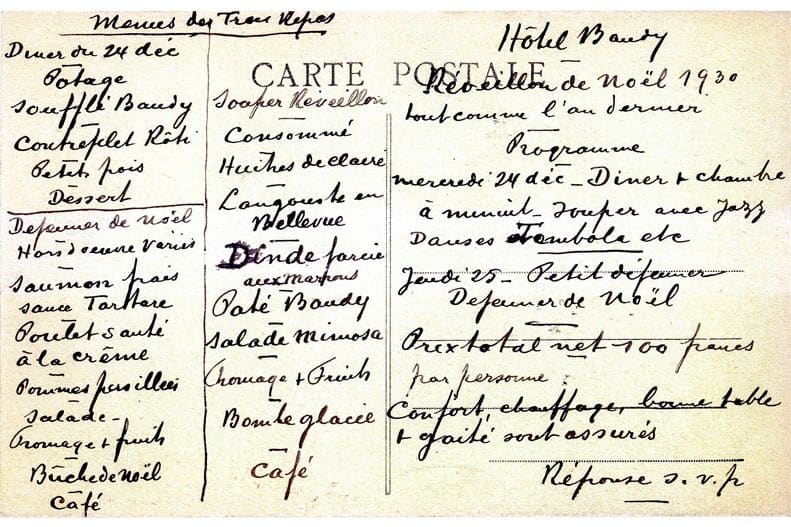
A handwritten card announces the réveillon of 24 December 1930: dinner and room, supper at midnight with jazz, dancing and a tombola, then Christmas lunch the next day. One hundred francs net a head — “comfort, heating, good food and good cheer assured”. The painters’ hotel had become a holiday house.

Christmas Eve

20th century

A house through the century

Changes of ownership, damage, alterations: this period is less documented than the golden age.

A house through the century

1941 — 1942

The end of an era

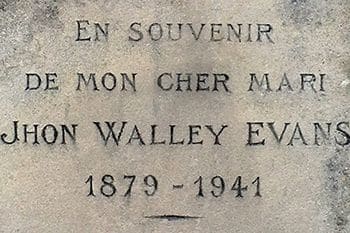
John Walley Evans, known as Billy, the last hotelier of the house, died in 1941 at sixty-two of the effects of torture at the Kommandantur; his headstone in the Giverny cemetery bears the dates 1879-1941. The following winter his wife lent the former studios for the village catechism. Angélina Baudy died in October 1942, aged eighty-nine.

The end of an era

After 1945

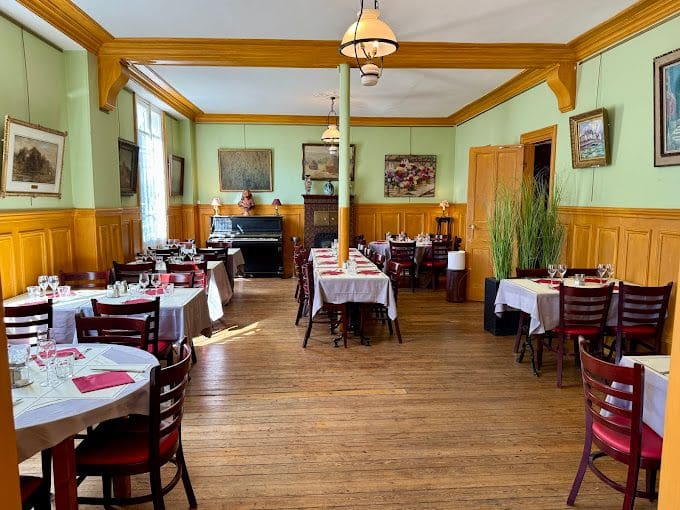
Restaurant and tea room

The hotel business gave way to a restaurant. The house kept its studio, its garden and its terrace.

Restaurant and tea room

Today

Restaurant Baudy and the gardens

The house still welcomes visitors to Giverny: the restaurant, the freely accessible studio and a park of one hectare.

Restaurant Baudy and the gardens

See the full timeline

Documentary holdings

Inside the Baudy archive

Postcards, family and studio photographs, printed advertising, paintings: the material traces of a house that saw several generations of artists pass through.

Explore the full archive The estate, place by place

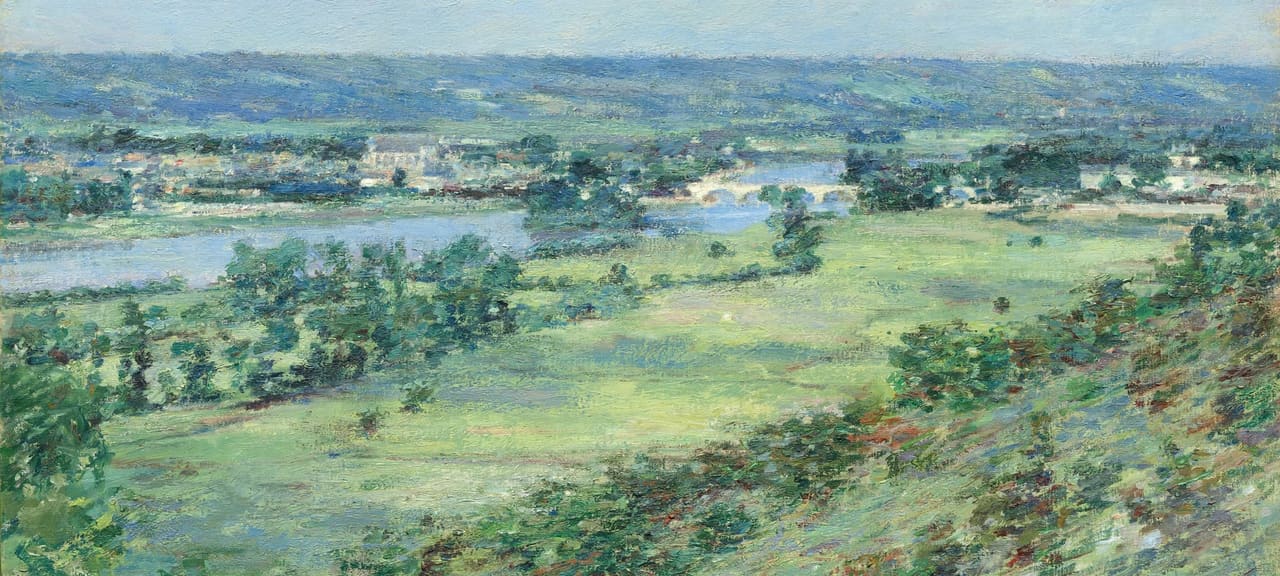
Theodore Robinson, the Seine valley from the hills of Giverny

The village

Giverny, a village of artists

The village stretches along the foot of the hillside, between the Seine and the Epte. In the late 19th century, Claude Monet’s presence and the light of the valley drew painters from Europe and the United States.

The former Hôtel Baudy belongs to a group of places that shape Giverny’s identity today: Monet’s house and gardens, the church of Sainte-Radegonde, the museum of Impressionisms.
Giverny and the artists’ colony

Landmarks in the village

81 rue Claude Monet, 27620 Giverny

The garden

The gardens of Baudy

Between memory, nature and Impressionism.

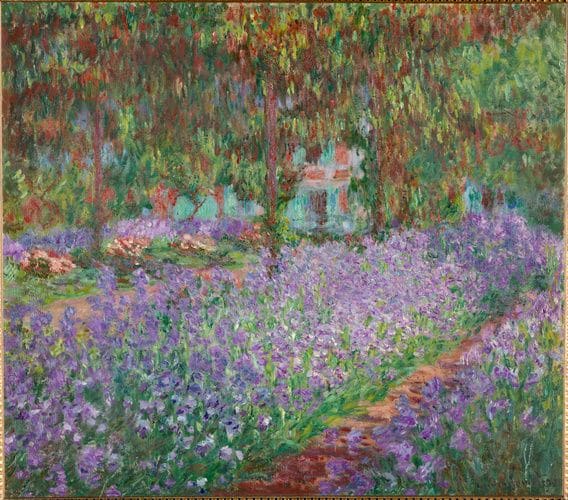
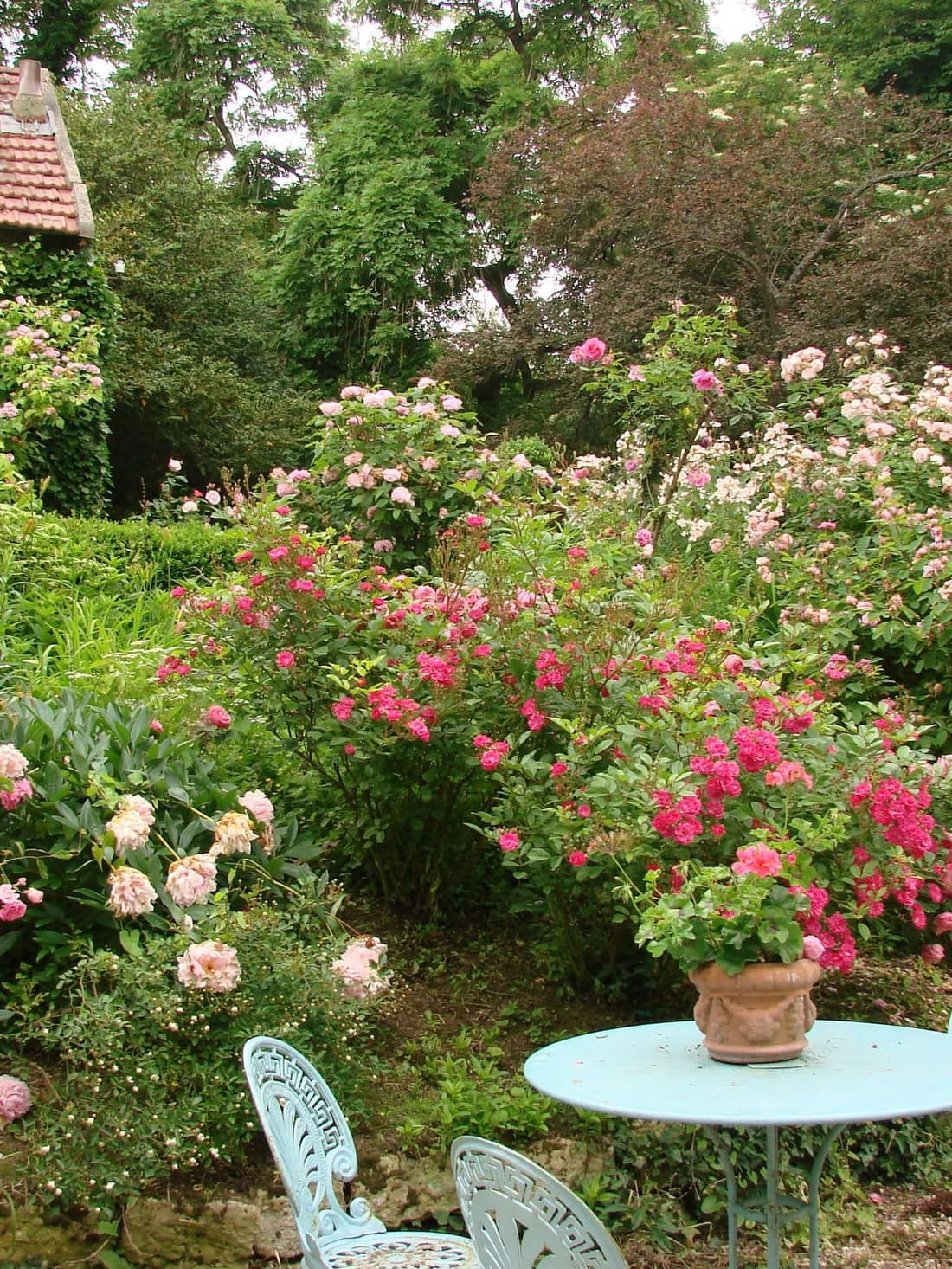
Roses, irises, wisteria: the garden extends the house and recalls that painting here was practised right beside the flower beds.
The Baudy rose garden: beds of roses in bloom in front of the studio, with a garden table and chairs
The rose garden
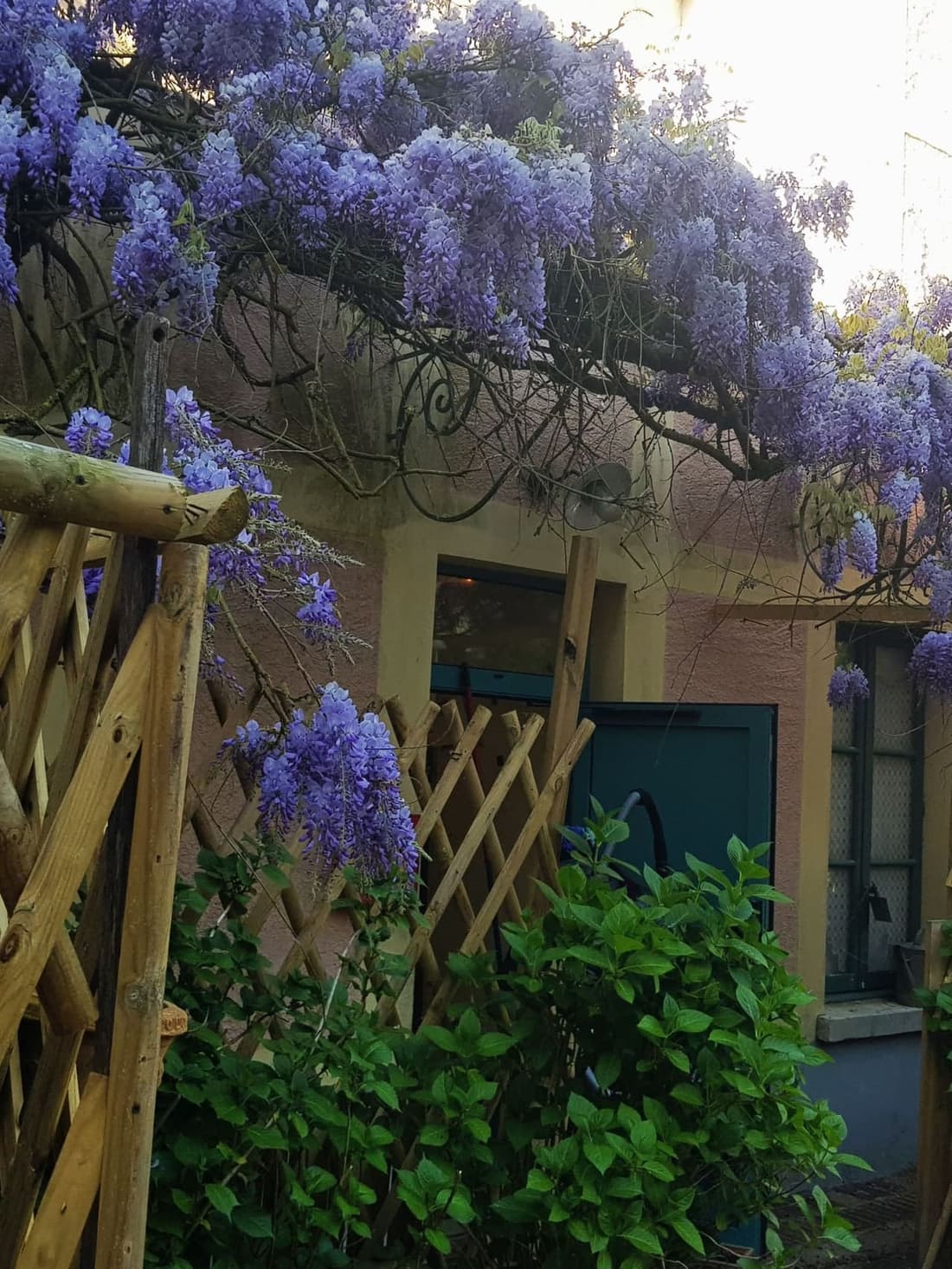
Wisteria in bloom running above a wooden trellis against a wall of the house
The wisteria
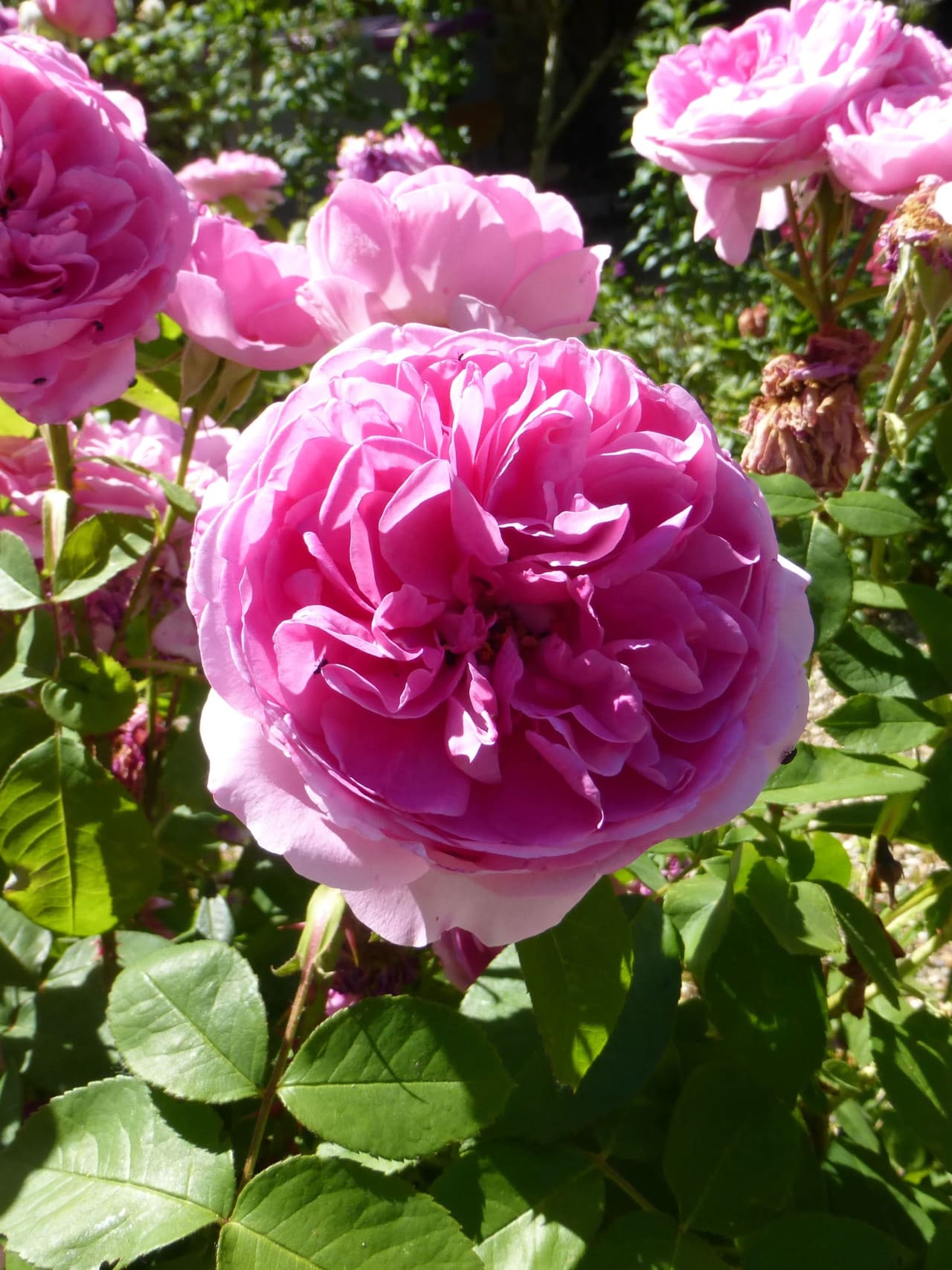
Close-up of an open rose with tightly packed pink petals in the Baudy garden
A rose
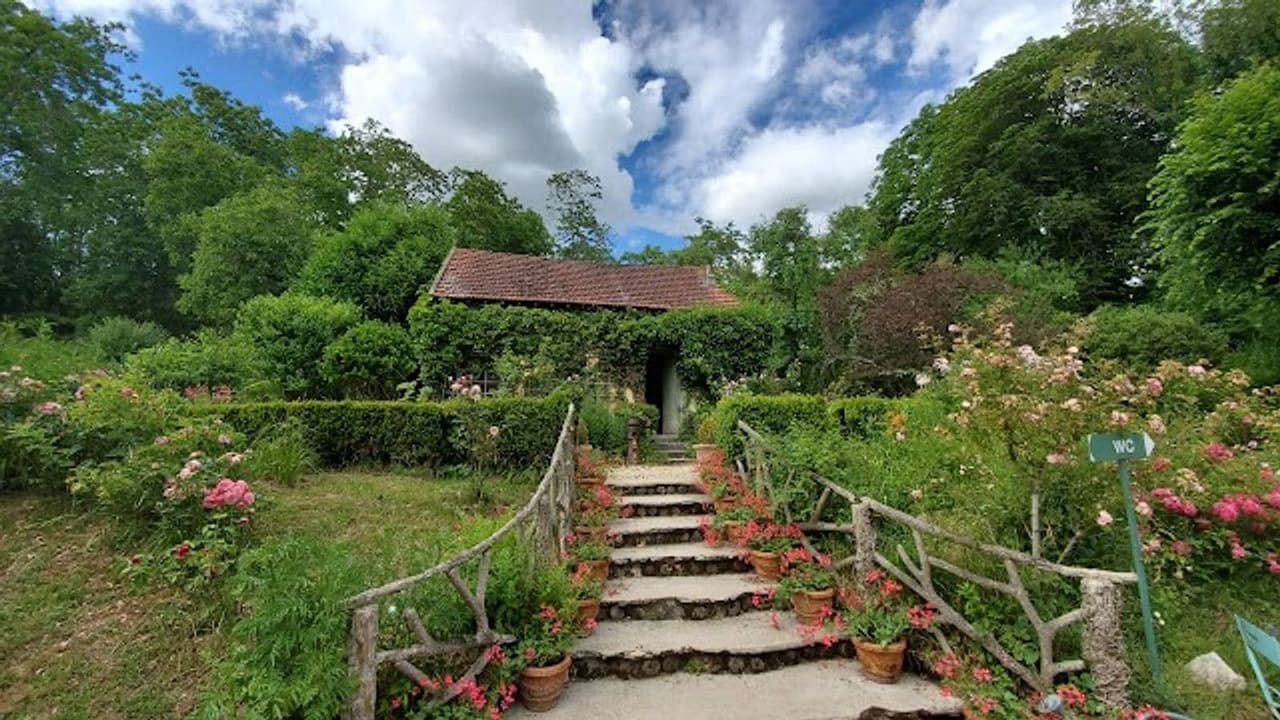
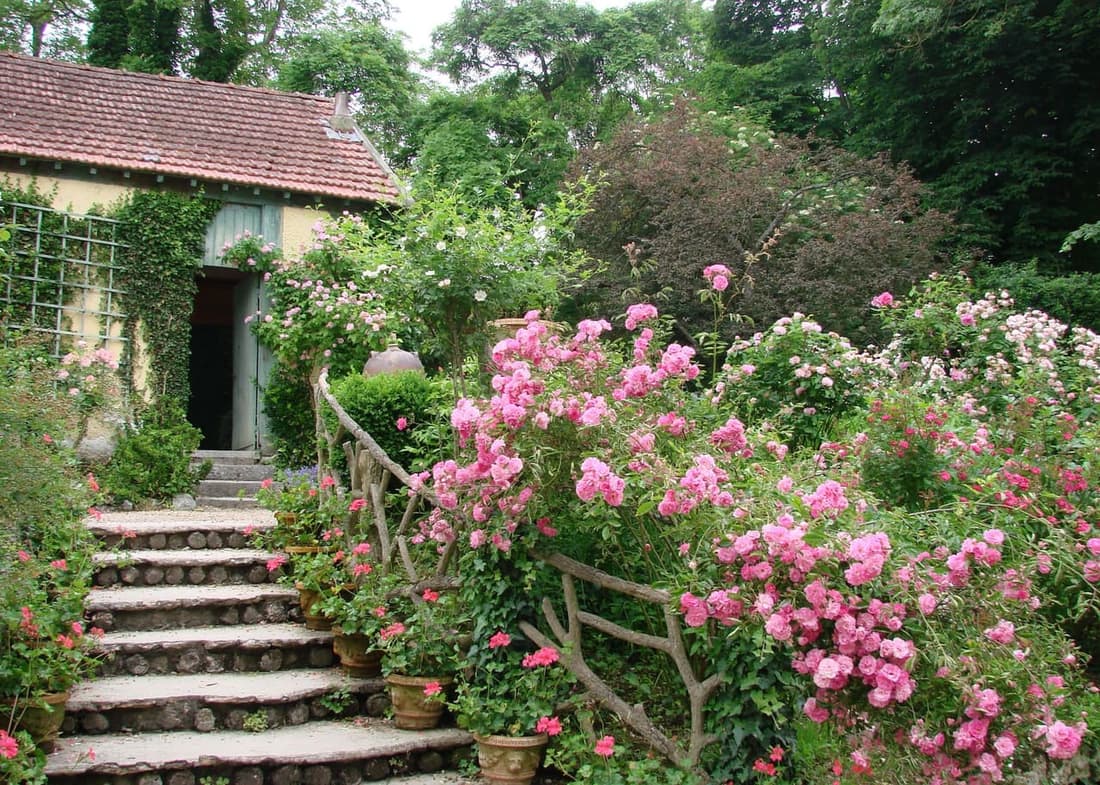
The studio seen from the foot of the garden, at the top of a stone staircase lined with potted geraniums
The studio and the steps
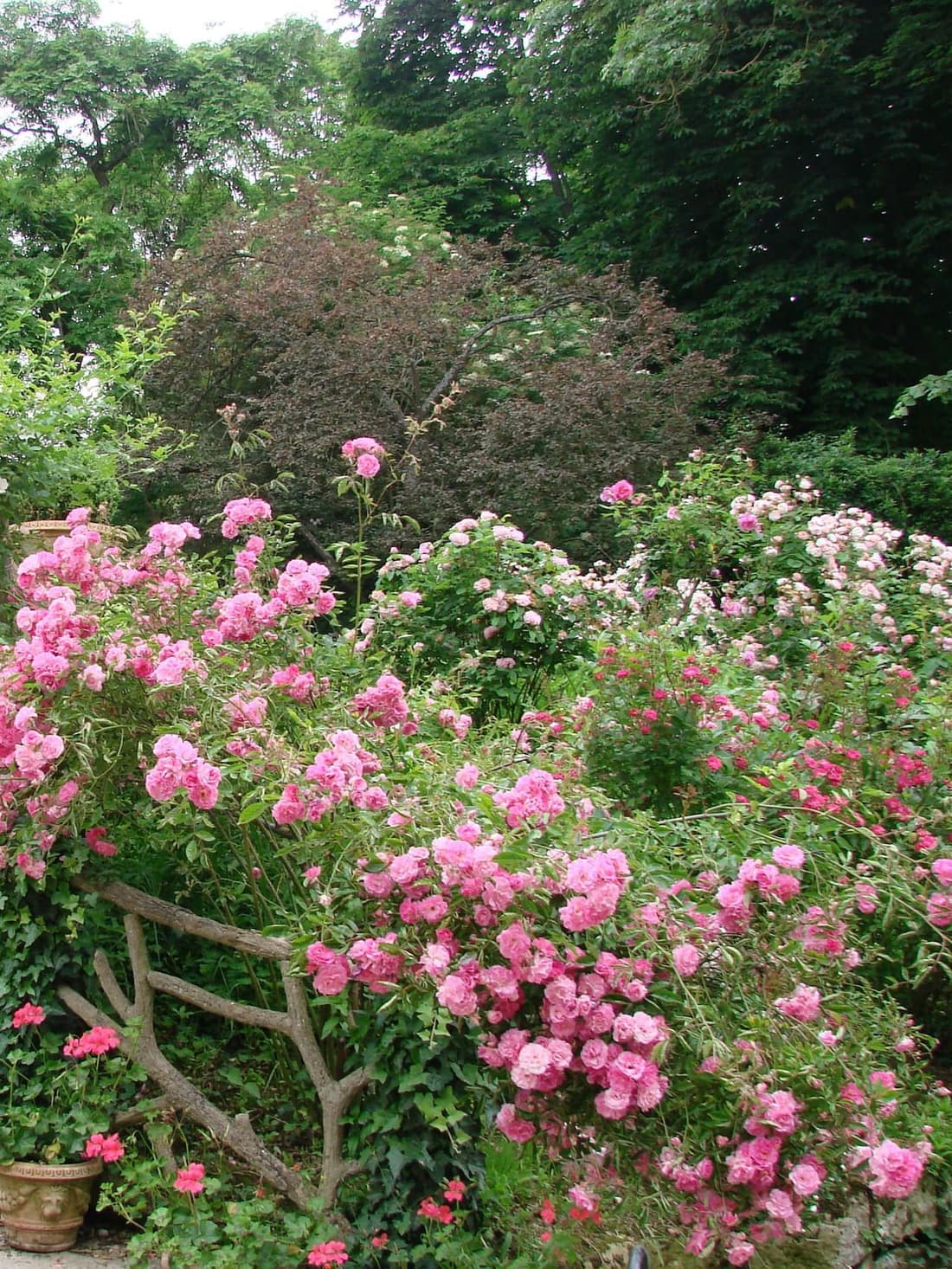
A bank of pink roses in full bloom in the Baudy garden
The beds

Discover the gardens

A village house, a garden, a table: no more was needed for a generation of painters to make Giverny their studio.
Today

The story continues

This is not a museum frozen in time: the house lives on through Restaurant Baudy and its gardens, open to visitors to Giverny.

The gardens of the Hôtel Baudy today: a stone staircase lined with roses in bloom climbs towards the studio

The Baudy Gardens

The rose garden, the studio and the paths, to walk through the seasons.

Discover the project